Arter’s collegiate diary pinpoints First Bash in May 1969;
Lake Erie ‘Proto Bash’ identified in 1968
By Thurston Thistledown, Interim Director of the Diary As History Institute
Revelations from Chet Arter’s collegiate diary are making waves in 2025 as the former Lincoln Hall resident revealed that he kept a diary during his days at Ohio University.
At first, several concerned gasps were overheard when Chet, also known as The Partymaster, revealed that some of his memories had been put down on paper in the inimitable – and neat – handwriting style of an interior design major.
“Well, I certainly had some interesting experiences back in the day,” Chet told the eBobcat in an exclusive interview, “but some memories are best left unpublished, if you know what I mean.”
However, Chet’s notes did yield some significant information as to dates of historical events, such as the First Bash and even an event that has been dubbed the “Proto Bash” by Lincoln Alumni historians (as in “primitive” or “pre-”).
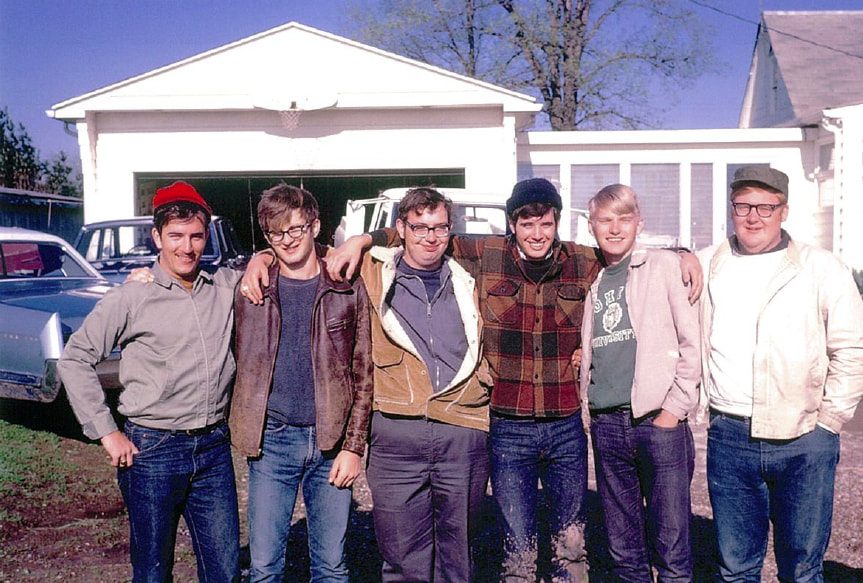
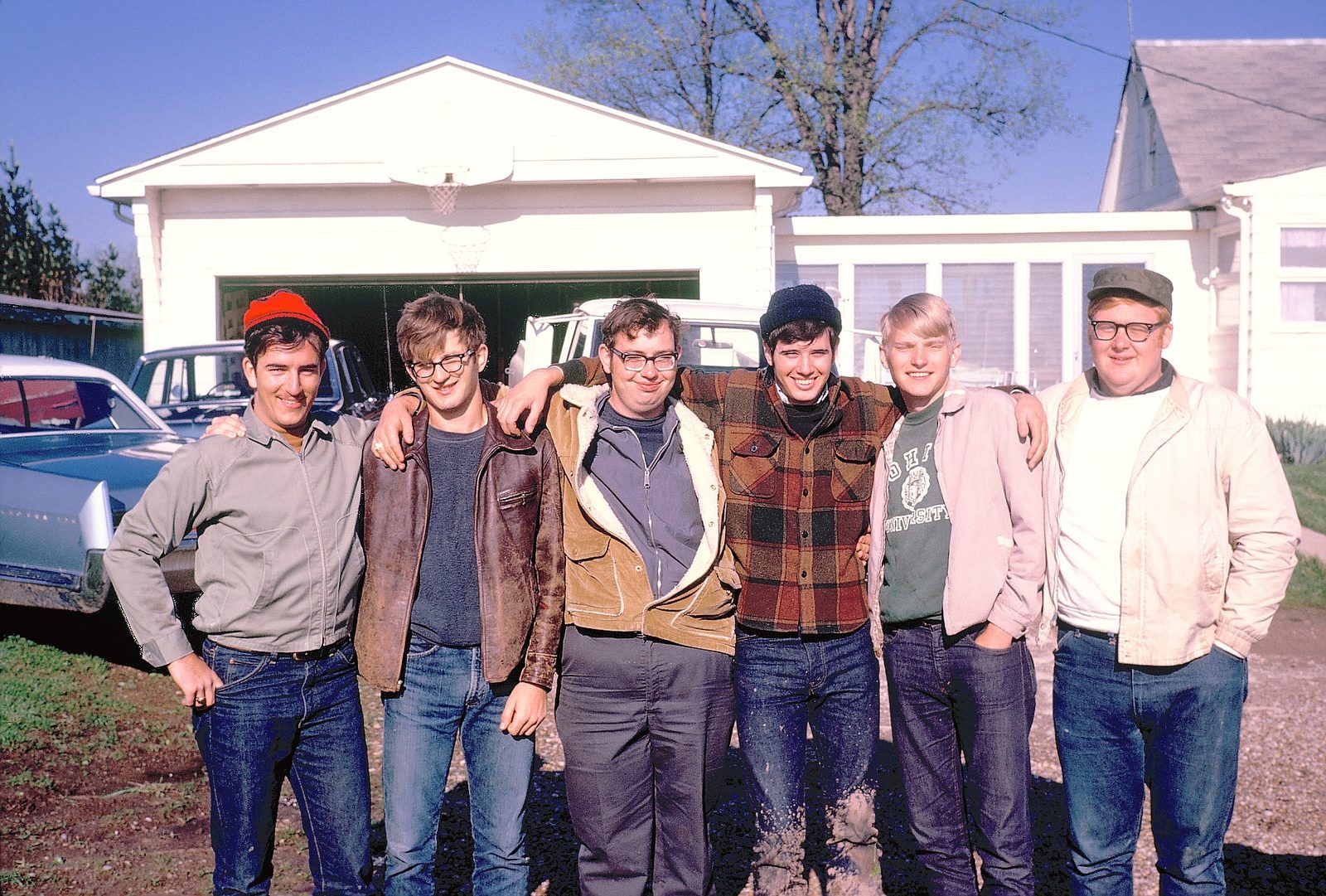
You see, there has been much discussion over the years about what has generally been recognized as the First Bash at the farm near Alexandria, Ohio where Chet grew up. Only a few photos exist of the attendees at the Arter farm, and those who attended recall the stately old cabin where the young men gathered to spend the night. Chet’s parents were great hosts and fed us well. There was horseback riding and it was muddy. Corf remembers trying to help push a vehicle out of the mud, and one of the photos bears witness to his extremely muddy jeans.
When Corf learned that Chet had kept a diary, one of the first things he asked about was information concerning the First Bash. Followers of this website will recall that Chet and Corf undertook a dangerous archeological expedition in 2021 to the rural Alexandria property, where they unearthed a few boards believed to be the only remains of the First Bash cabin.
And so Corf urged the erstwhile diaryist Chet to read through his handwritten diary for clues as to the date of the First Bash.
Imagine Corf’s surprise when, in early May 2025, he received the following diary entry from Chet in an email:
“May 10, 1969: A beer distributor truck ran into the door of Dave Fox's car! Neither driver was cited. Konrad Kmetz got a goal in lacrosse as we beat Pitt. Al Stapleton drove Zork, Coffey, Big Red, Snoots and I to my house this evening. We camped-out at my cabin. It was cold as hell - 30 degrees, windy, tornadoes were all over the state."
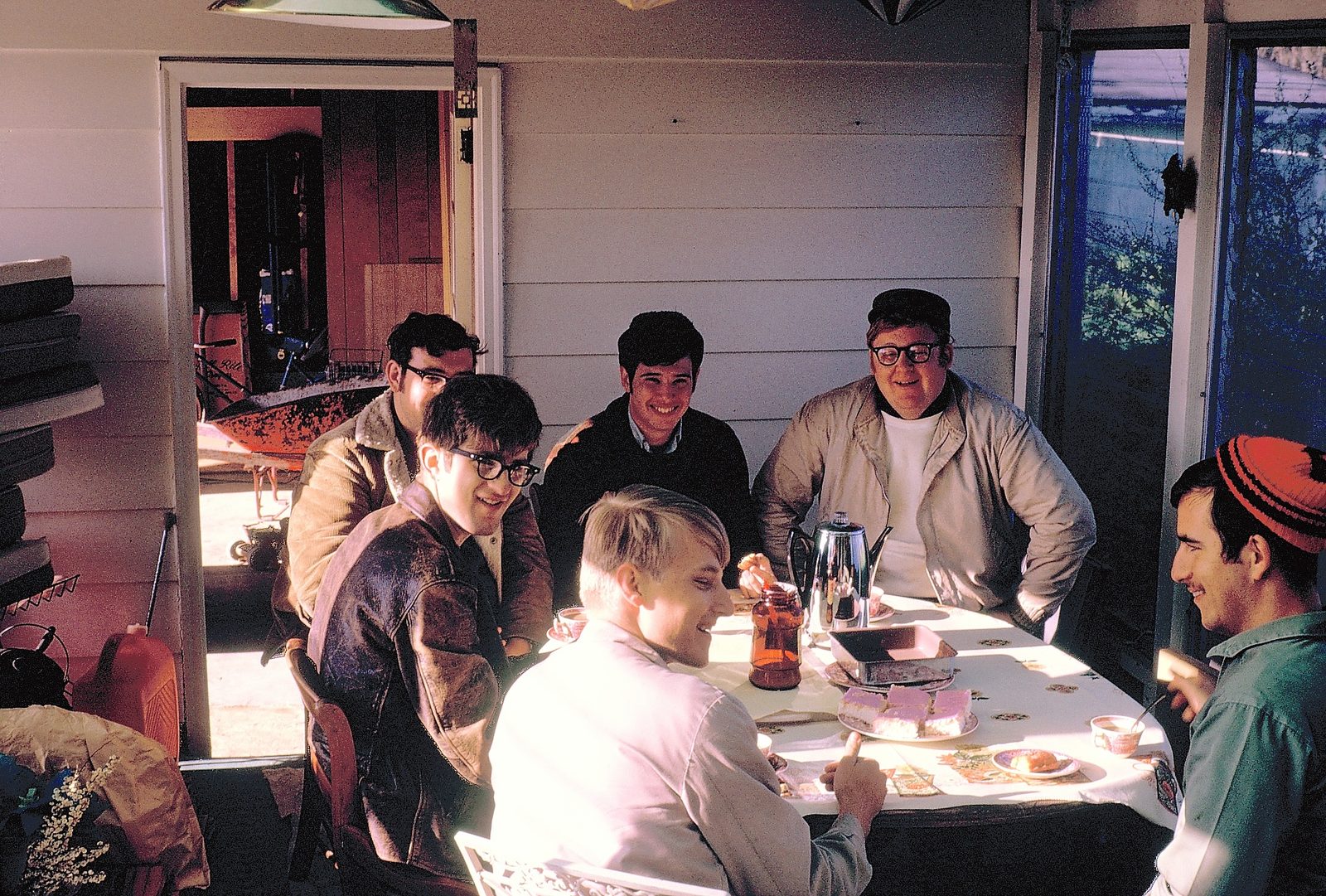
A subsequent Google search by Corf confirmed that May 10, 1969 was a Saturday. And though Chet’s entry was very succinct, it provides evidence that the First Bash took place May 10-11, 1969. The names listed (Zork, Coffey, Big Red, Snoots and Big Al) are the same young men pictured in that very rare photo from Alexandria. The weather description is just as Corf remembers it. Others not in the photos may have been present as well, but we have no photographic evidence or police blotter data to confirm additional attendance. Adding interest and historical context was the mention that our own Konrad Kmetz – who should be in the Bobcat Athletic Hall of Fame – scored a goal as the lacrosse team beat Pitt. Chet's reference to the beer truck's encounter with David Fox's car adds another layer of detail to that cold spring day in 1969.
And now, a ‘Proto Bash’?
Upon additional review of his diary entries, Chet referenced an interesting situation from August 1968, when Chet made mentioned a big party on Lake Erie, some nine months prior to the First Bash. Read on:
“August 3, 1968: I got up at 5:00 and waited for Big Dick from 6:00 - 6:30 when he came. I drove to East Harbor 'cause we missed Paul and the gang at Westerville by 20 minutes. Eleven of us (4th Floor Lincoln Hall reunion) swam, water-skied and had a cook-out at Paul Montgomery's trailer. Zurenko, Snoots and Coffey didn't make it! We went to ‘Dales’ for a few beers - nice boy - broad ratio - nice broads, then L&K. Sleeping in cars, boat and trailer.”
“August 4, 1968: We got up at 1000 (10:00 a.m.). I drove the last car in the 5-car caravan in search of a place to eat. Traffic was heavy. I didn't see them turn. After backtracking and later finding out we drove about 40 miles off of the road, Big Dick and I met the gang a few minutes after passing through the gates of Cedar Point. We rode the ‘dogem’ at the the same time and the train. Also swam. Really had a blast. Big ‘D’ drove his cycle home to Granville.”
Only Chet knows what else might be found among the pages of his diary. Perhaps references to concerts, lectures, gin jugs or other formative episodes will be unearthed.
Likewise, there must have been at least one more party at the Arter farm in Alexandria, because Corf recalls being there and seeing our favorite sailor-scholar, Louis Neill Gray, high up in a tree, probably trying to catch sight of a suitable sailing lake somewhere in the distance. This may have been the night when the future Lincoln Alumni visited the Pataskala Street Fair and demonstrated their lack of understanding of the concept of moderation. Fortunately for Corf, he did not make it to Pataskala because he had a date that evening 60 miles away, but the stories from Pataskala have been told with some reference in the decades since.
So if you happen to see The Partymaster, encourage him to review his diary for more nuggets from those golden years when we were thin, trim and had hair to spare!
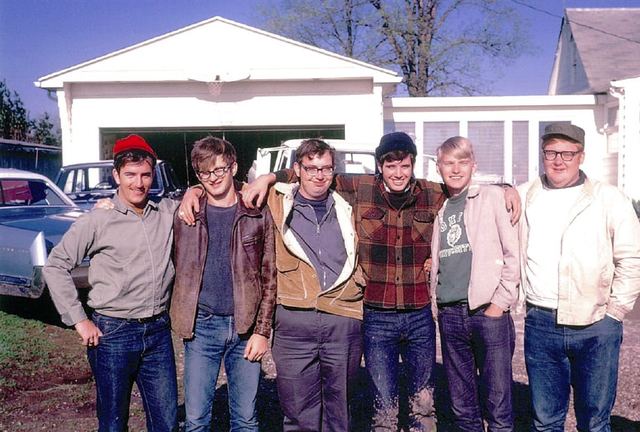 First Bash attendees in May 1969: Chet, Zork, Big Al, Corf, Snoots, Big Red.
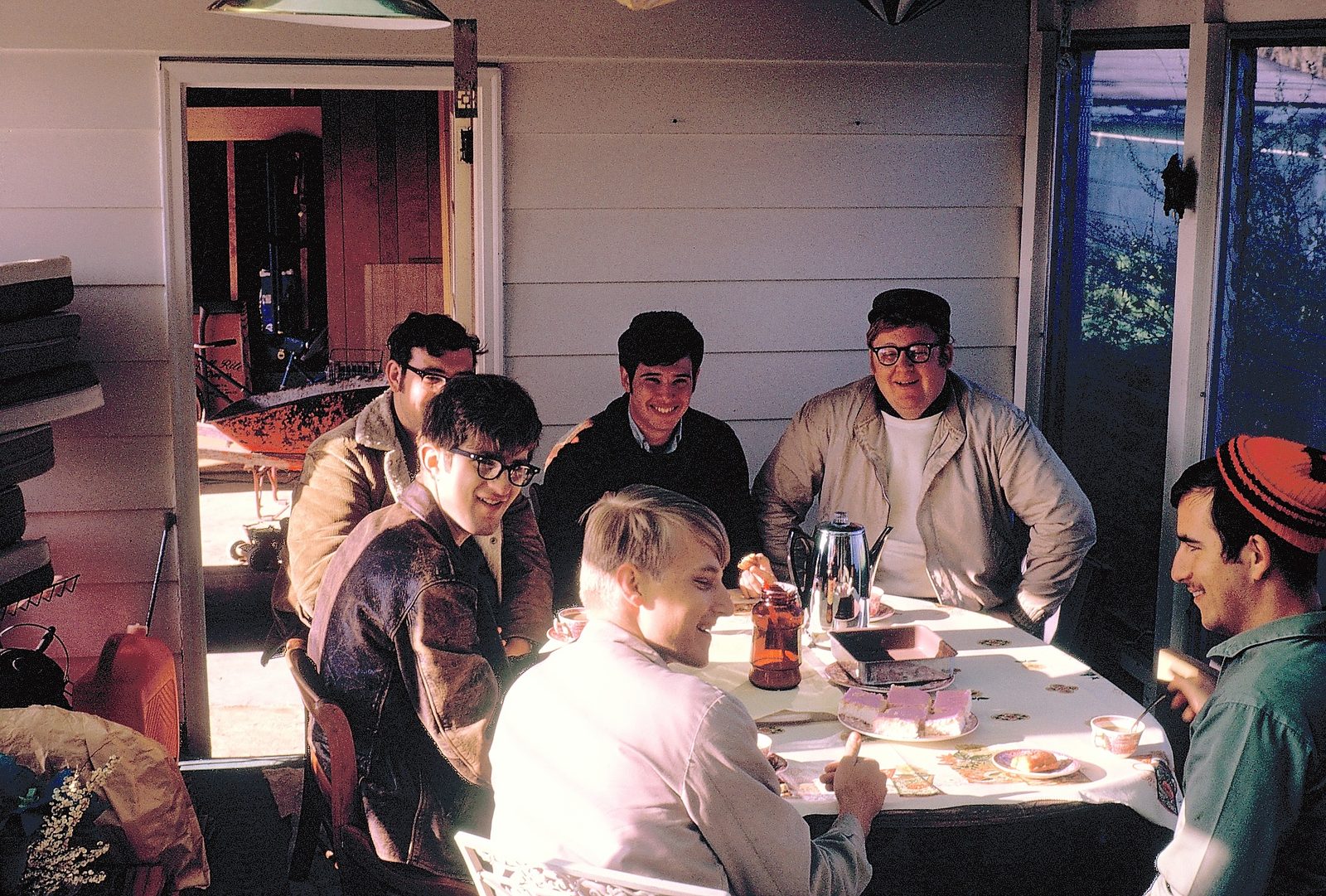
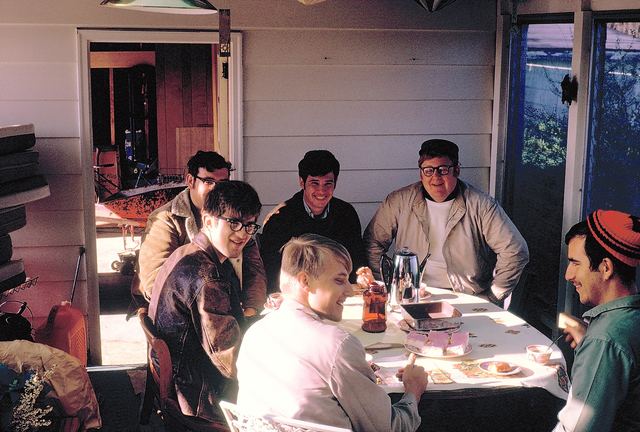 First Bash participants at the Arter place in May 1969.
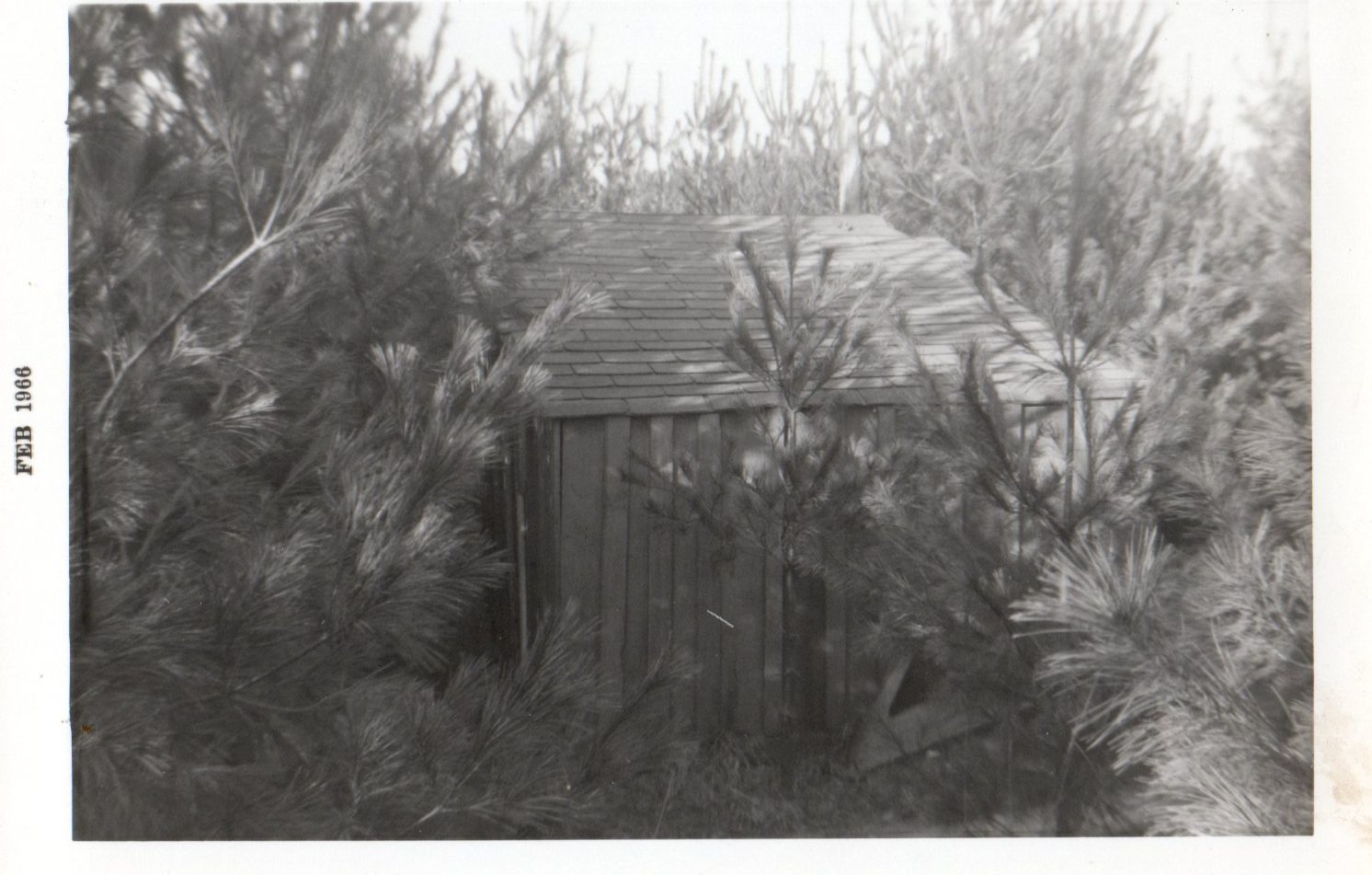
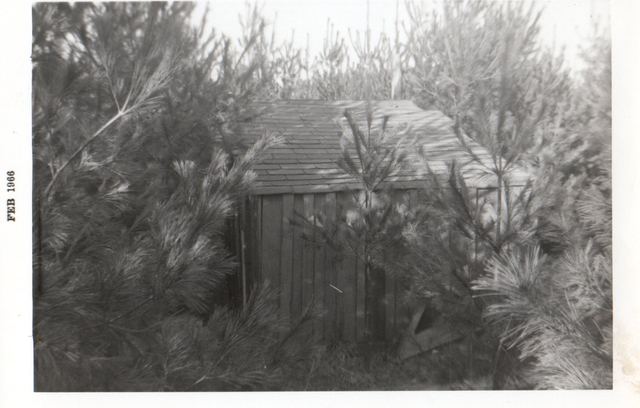 The only known photo of Chet's Bash cabin, taken (or developed) in 1966.
A forensic archaeology expedition report on the 2021 search for the First Bash site
A White Paper and Photo Essay destined for the Anthony Trisolini Holographic Institute
Special thanks to the Lincoln Alumni Research Division (LARD)
Title: In Search of the First Bash Site
By Chester A. Dibblebliss, with introduction by Corf W. Cobban (names altered to protect them from their legions of admirers)
INTRODUCTION
Rarely do researchers have the opportunity to investigate something as significant as the site of the first Bash, an event that has achieved legendary status among a certain subculture known as the Lincoln Alumni. Historians agree that the first Bash took place some sixty years ago at the Dibblebliss farm near Alexandria, Ohio. Due to insufficient documentation at the time, the exact date — and even year — of the event remains in dispute, but those who were there generally place that seminal Bash in either 1968 or 1969. (NOTE: Arter's long-lost diary, recovered in 2025, pins the dates of the First Bash as May 10-11, 1969.)
By the twenty-first century, some historical revisionists had already begun to dispute the stories of a great Bash of monumental impact on society. Some so-called scholars even went so far as to deny that the first Bash even happened.
Realizing that the original Bash attendees are now senior citizens or have already gone on to meet their maker, Lincoln Alumni Sergeant-at-Arms Chester A. Dibblebliss and Bobcat Editor/Publisher Corf W. Cobban set forth on April 27, 2021 to try and discover forensic evidence relating to the existence of the First Bash site.
The expedition was led by Mr. Dibblebliss by virtue of his ownership of the farmland, and perhaps fueled by some jealousy of the fame attained by Max Yasgur for hosting Woodstock in 1969. “Yasgur gets a lot of credit for being an innovator, but I’m pretty sure the Bash happened first,” Dibblebliss said. “And while they may have had a half million people at Woodstock, I am convinced that, pound-for-pound, the first Bash had more life-changing impact. Also, there was a lot less garbage at the conclusion of the Bash,” Dibblebliss stated. “I feel it’s time that the Bash takes its rightful place in history, and that’s why we set out to find the original site, prove that the Bash actually happened, and set the record straight.”
The search team is grateful to the Lincoln Alumni Research Division (LARD) for financial assistance and emotional support before, during and after the expedition.
What follows is Mr. Dibblebliss’s report on a subject dear to his heart. Please note that the team was also searching for arrowheads.
Chet-led recon mission in 2021 provides stunning evidence of first Bash site
A personal account by noted forensic archaeologist and Sergeant-at-Arms Chester A. Dibblebliss
Chet decided that he’d better do a recon of his 70-acre farm before arranging for an All–Basher arrowhead hunting expedition (as mentioned on a Zoom call).
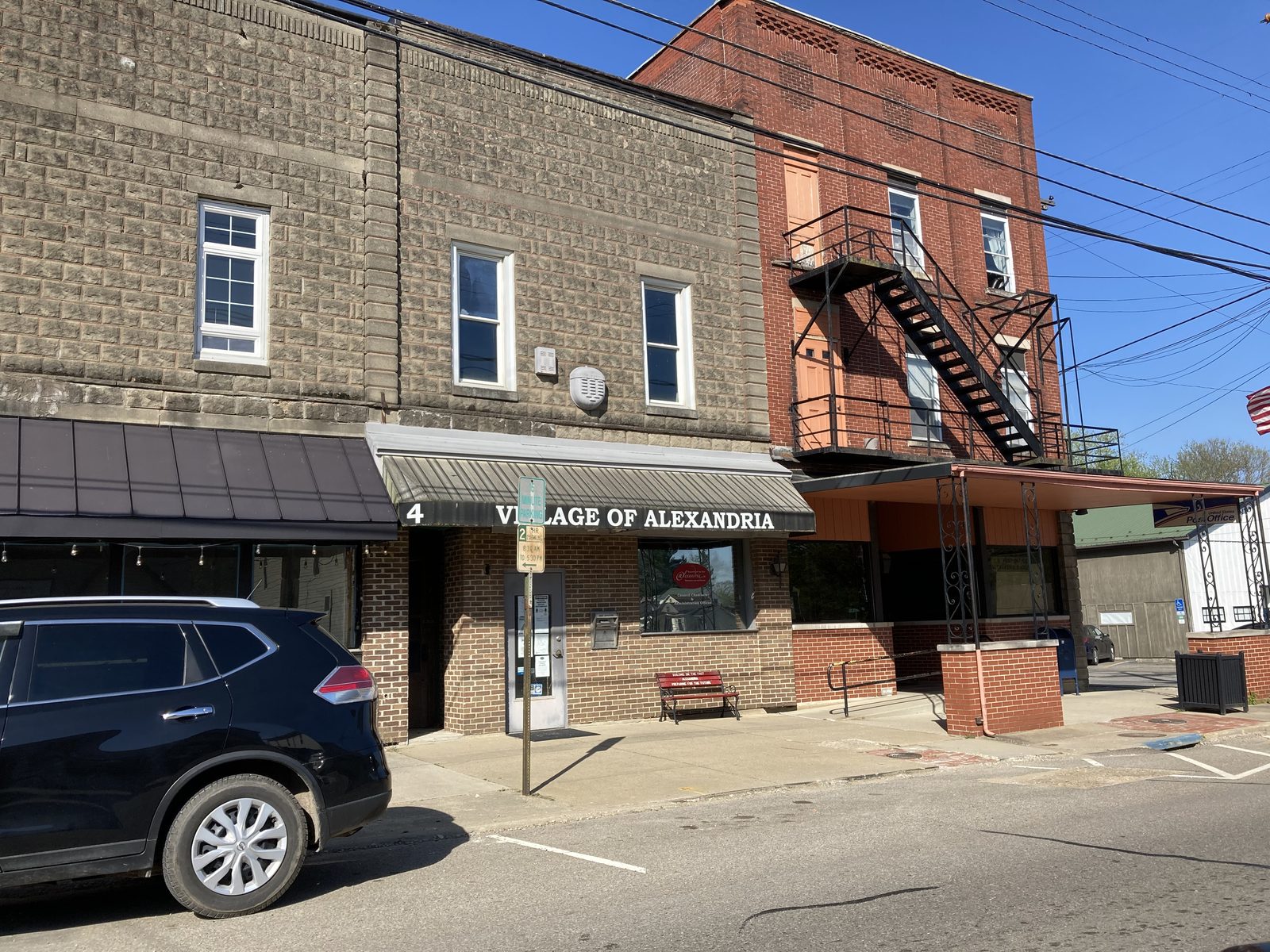
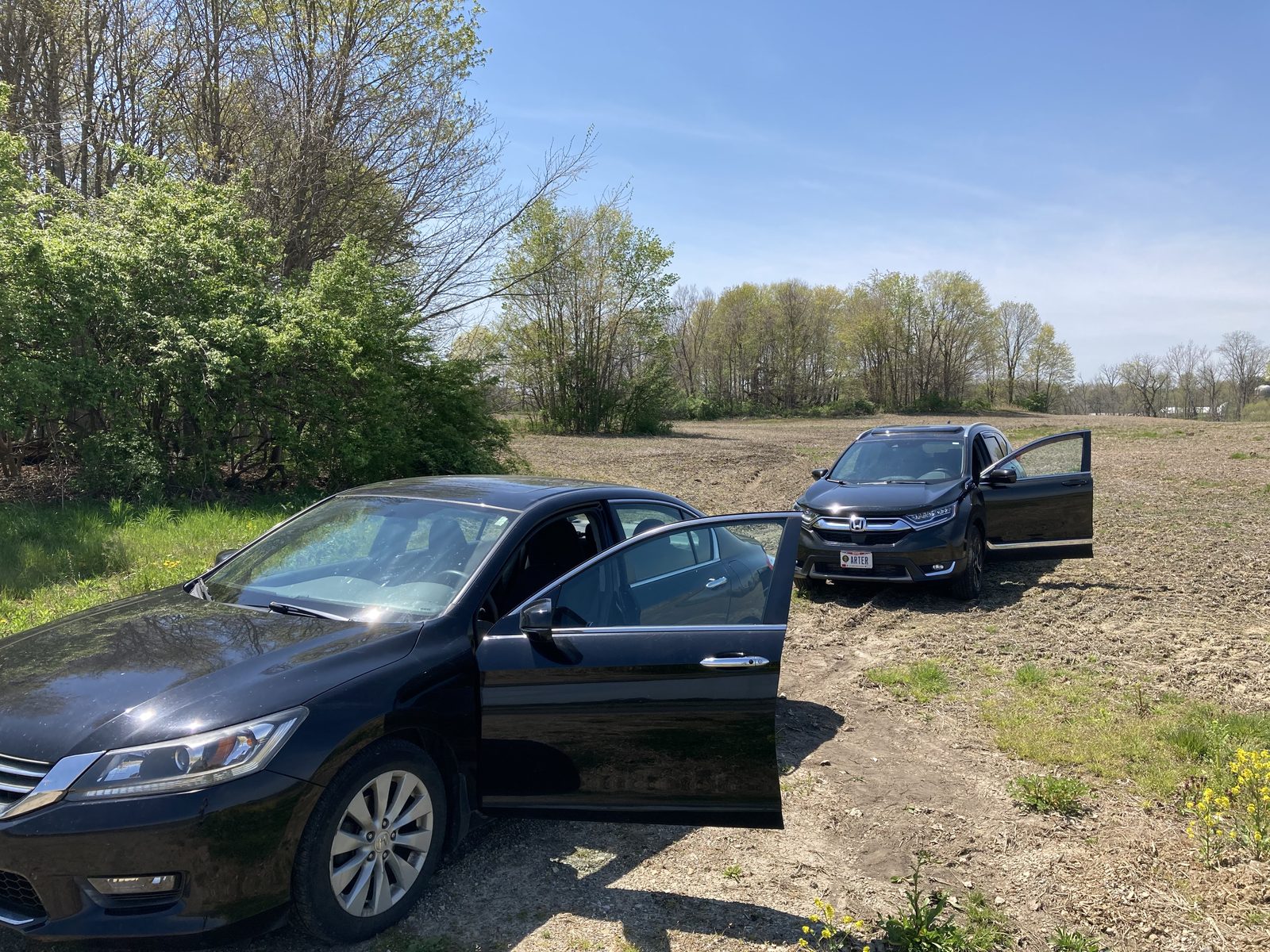
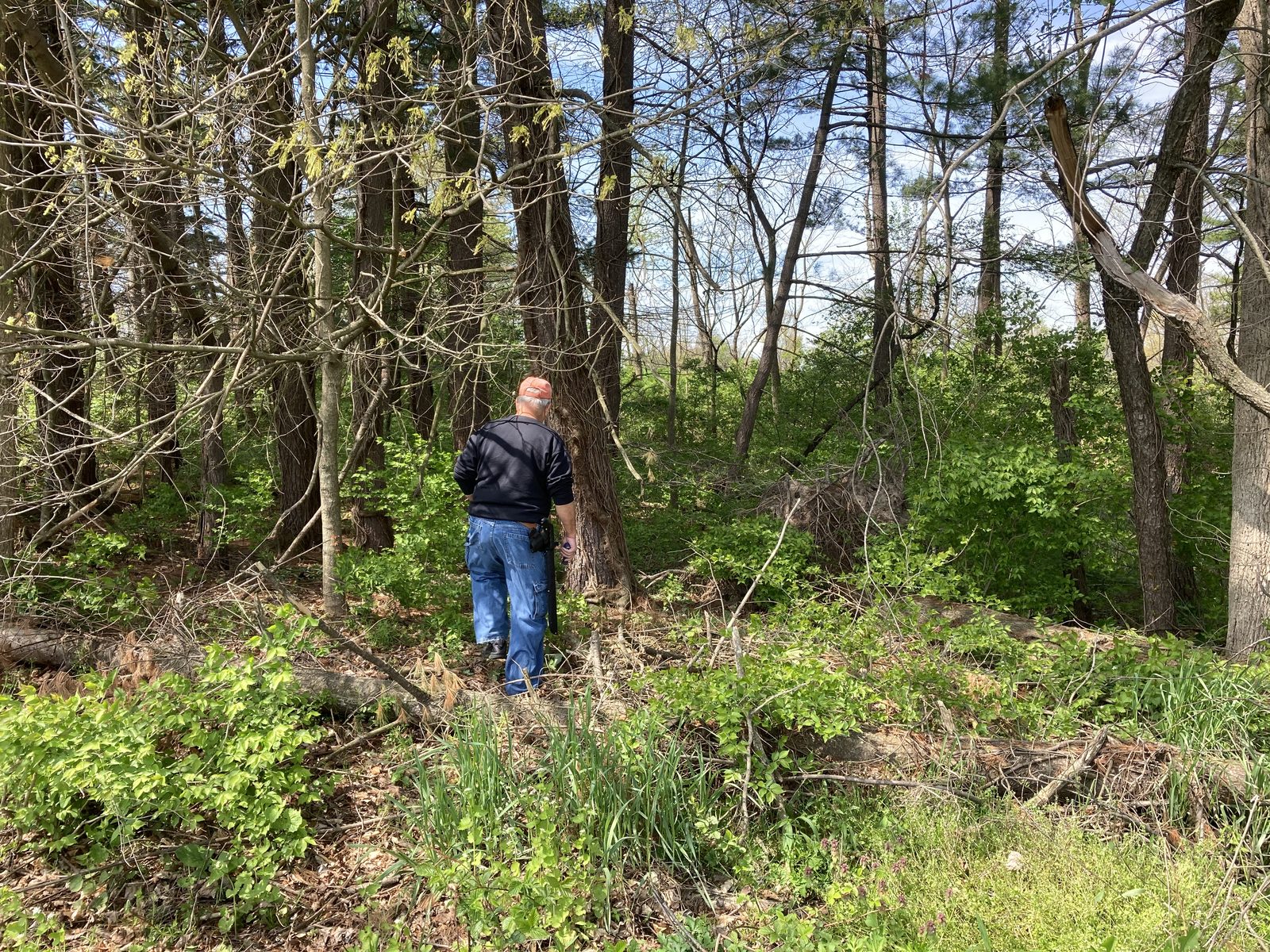
He met Corf at the Alexandria, Ohio (photo 1) farm (photo 2) and they sauntered off in search of the elusive ‘heads. It had been more than 50 years since Chet had worked the farm and the terrain was not exactly as he remembered it. Key terrain features were long gone (photo 3). The pine woods (photo 4) were a lot taller than during the campout days and it was a natural obstacle course to get to the cabin site (photo 5). The cabin that Chet and his cousin built almost 60 years ago had long succumbed to the elements – not even empty beer cans could hold it up any longer!
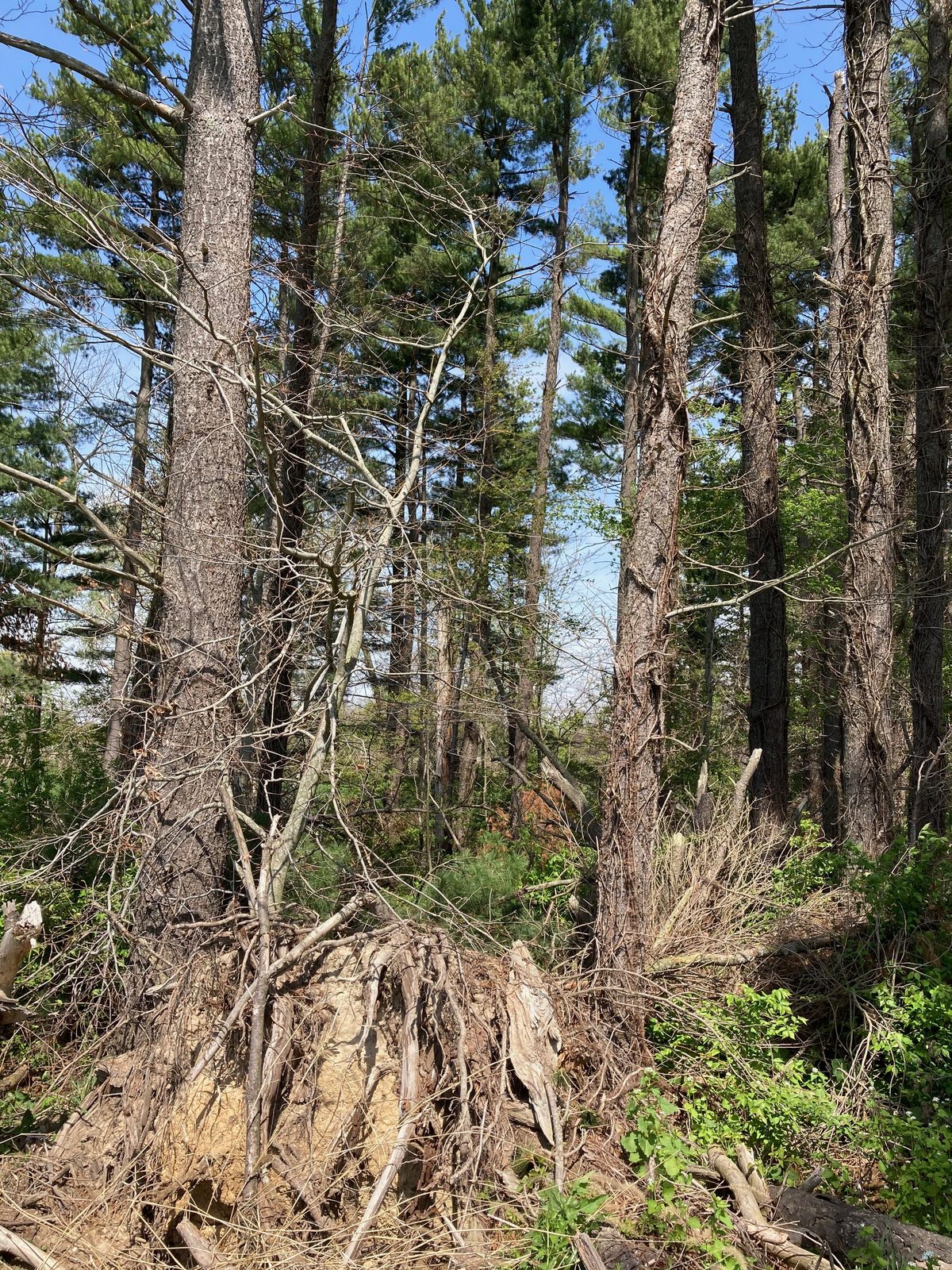
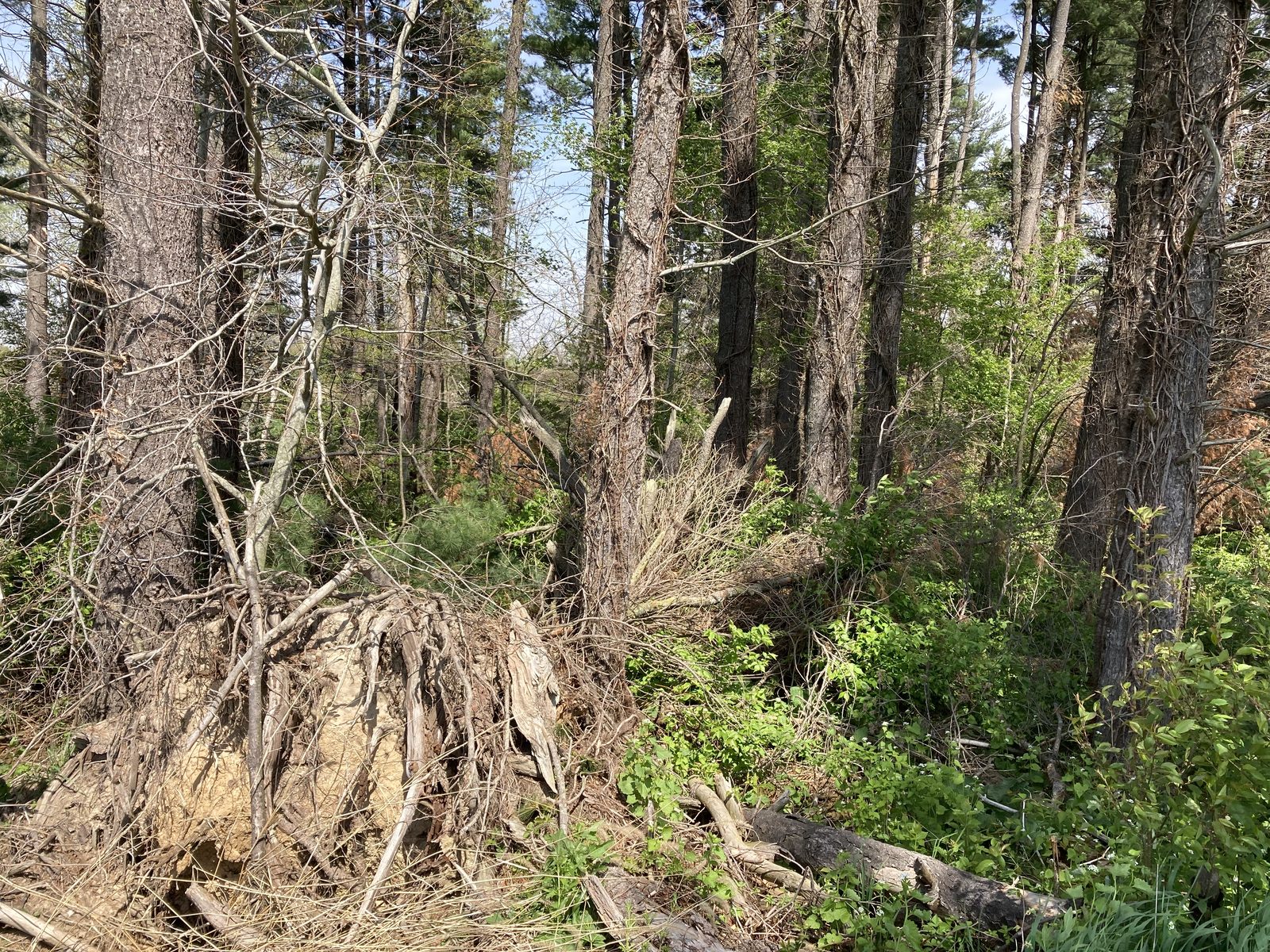
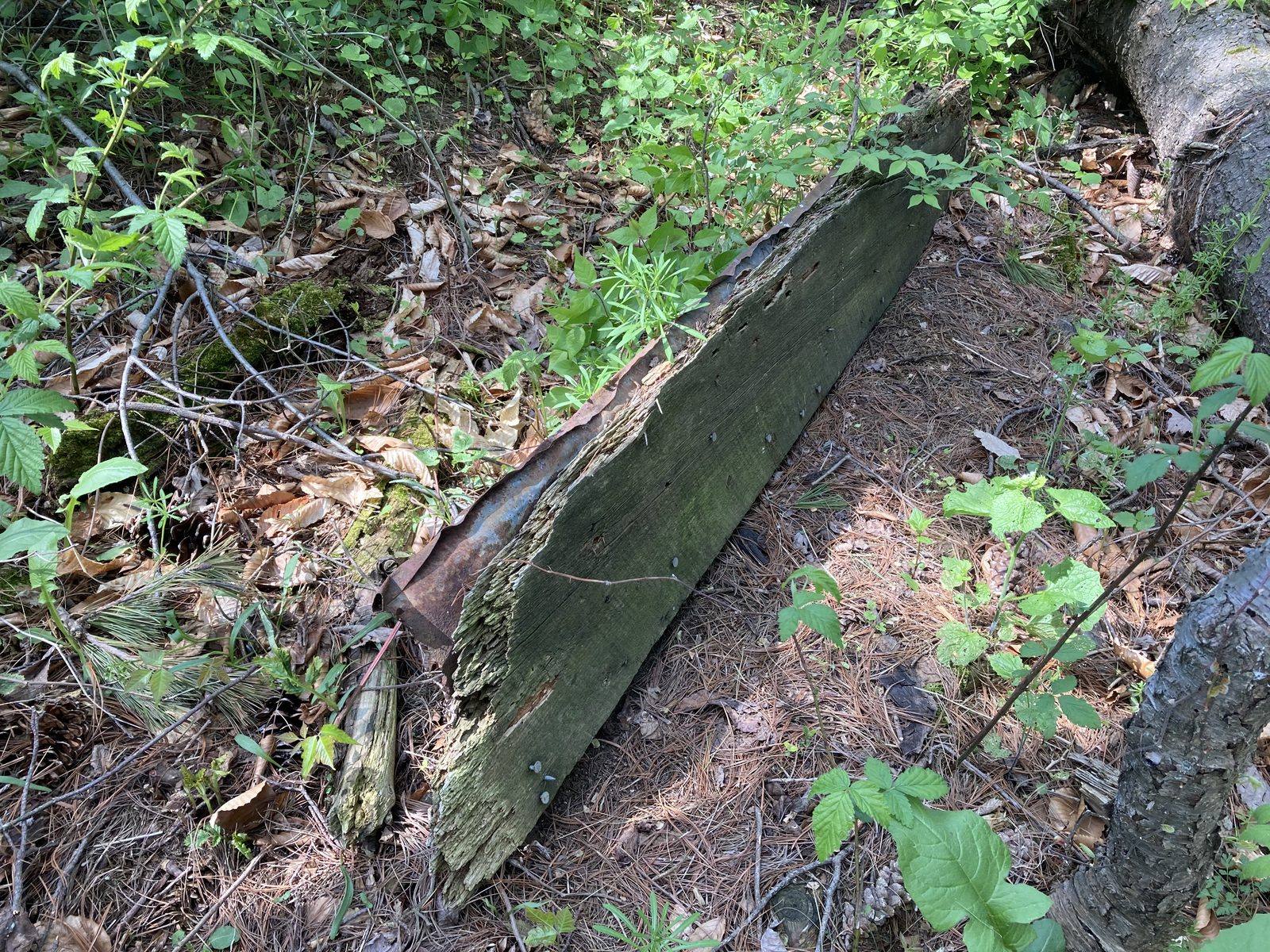
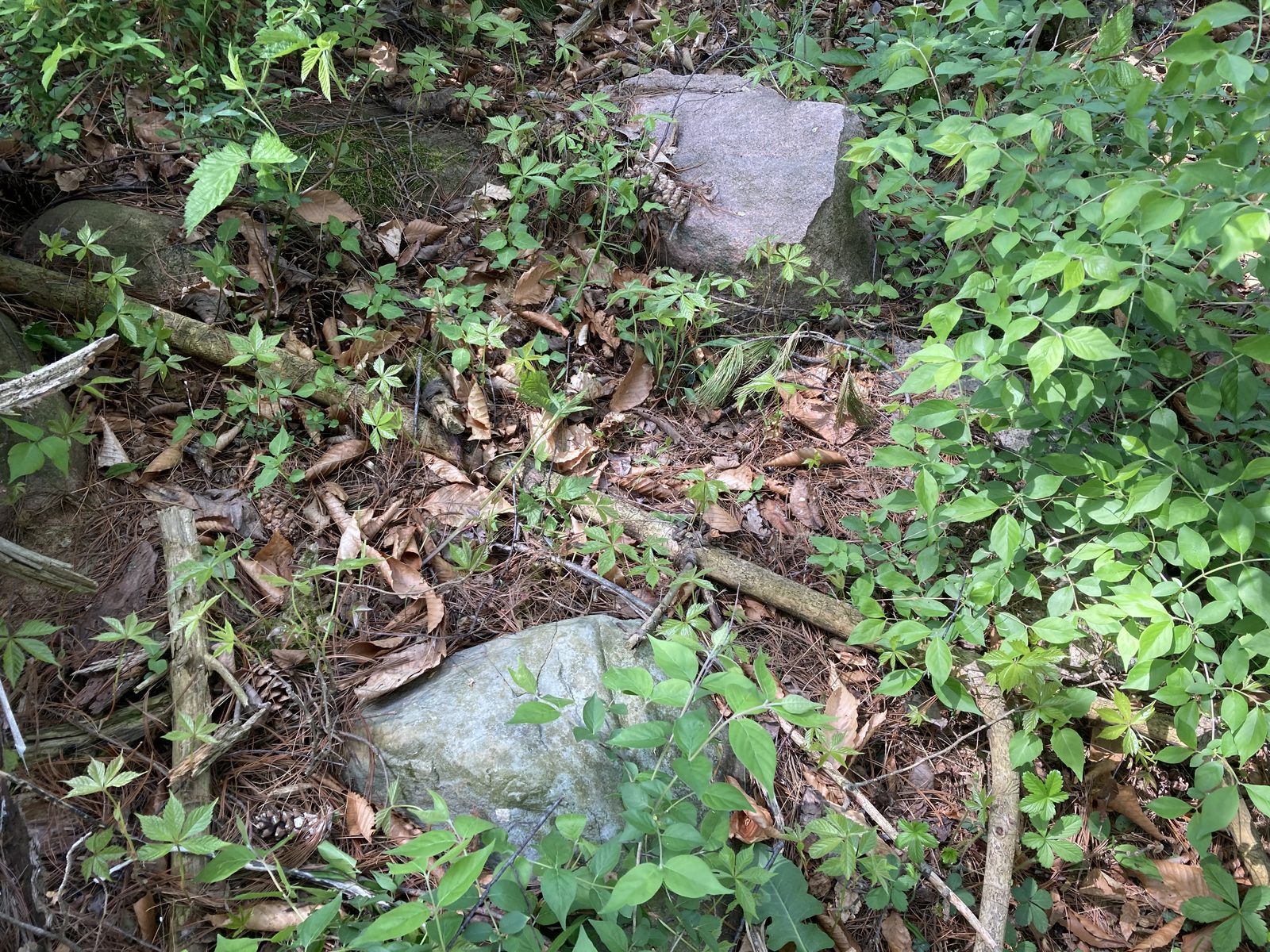
After wandering thru the pines, at last the first signs of the cabin – a rotting 2”x12” board! (photo 6). And then they stumbled on the original fire pit (photo 7). Corf noted that rocks last longer than wood. Chet agreed that that was a good observation!
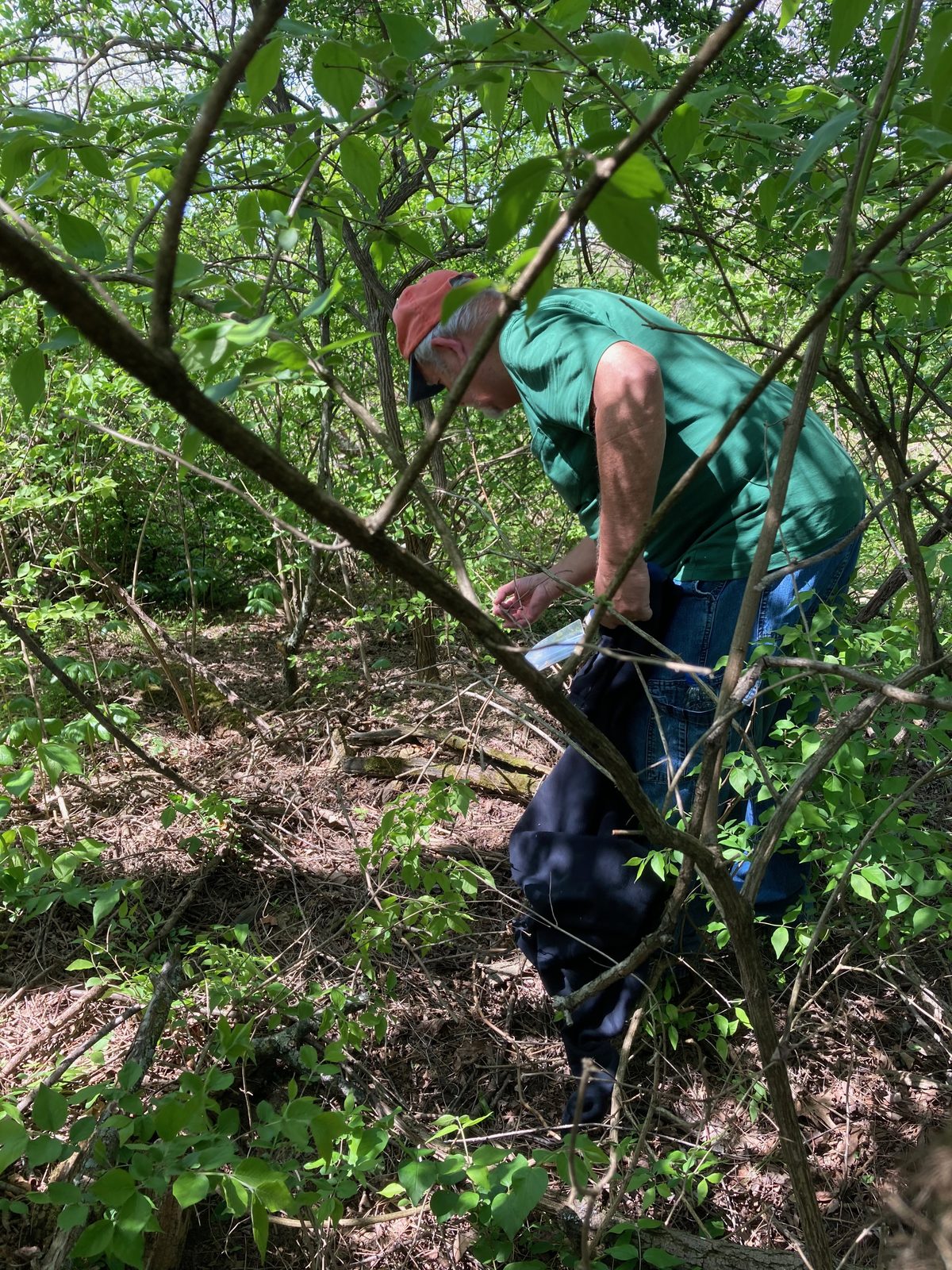
The huge oak tree next to the stream where American Indians sat under to knap their arrowheads was not to be found. Chet had found several flint chips there years ago. Chet had to rely on a dead reckoning technique he had learned in the Army to find the “site” which was well overgrown. Alas, after more than an hour of probing and digging with dibble sticks, not even a flint chip was found! Without that Indian marker tree, it would’ve taken several hours of refined archaeological work to locate the “site” (photo 8).
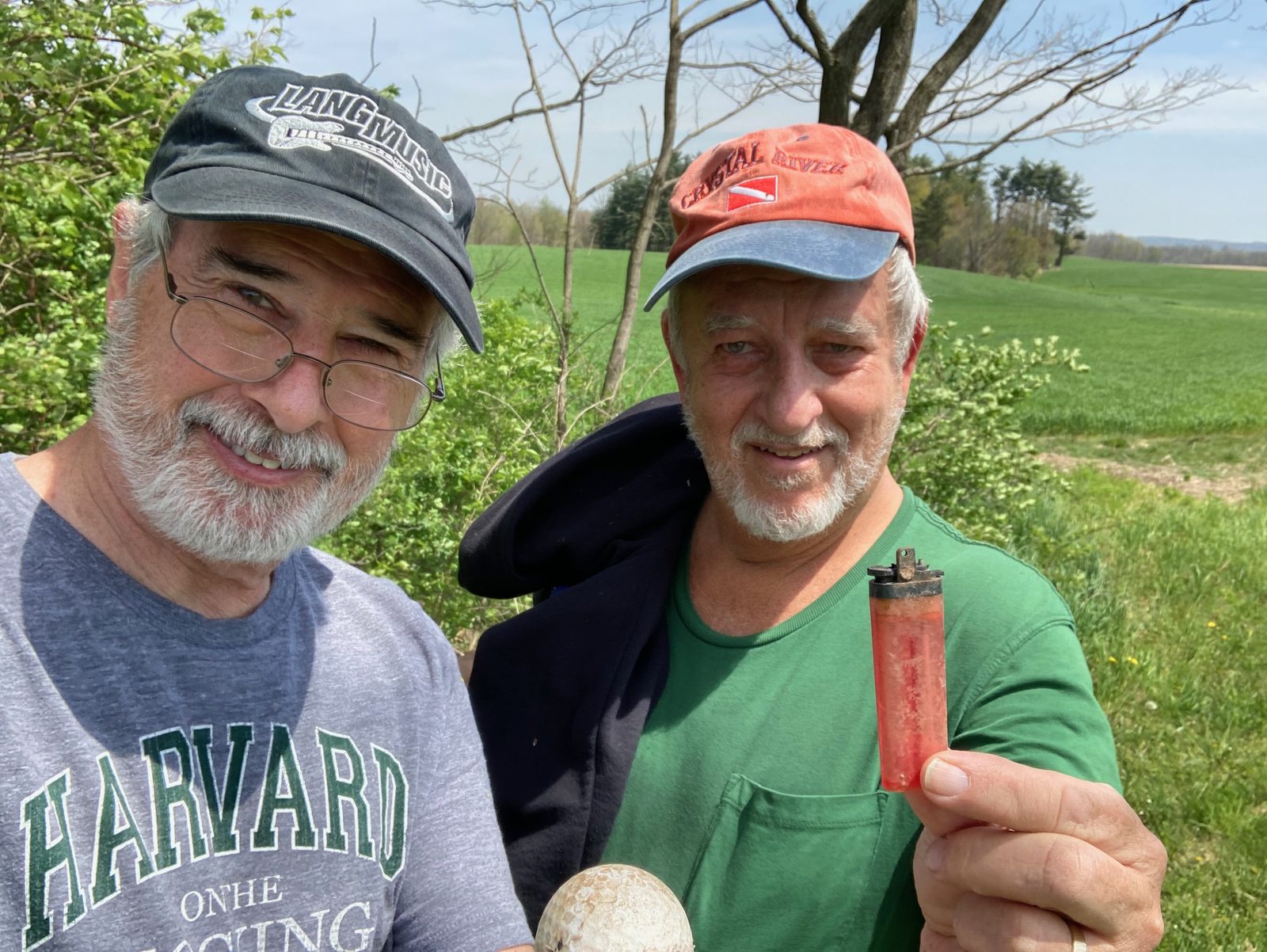
All was not lost, though, as a Shawnee fire-starter was dug-up and brought to the surface (photo 9). Corf estimated it to be more than 300 years old.
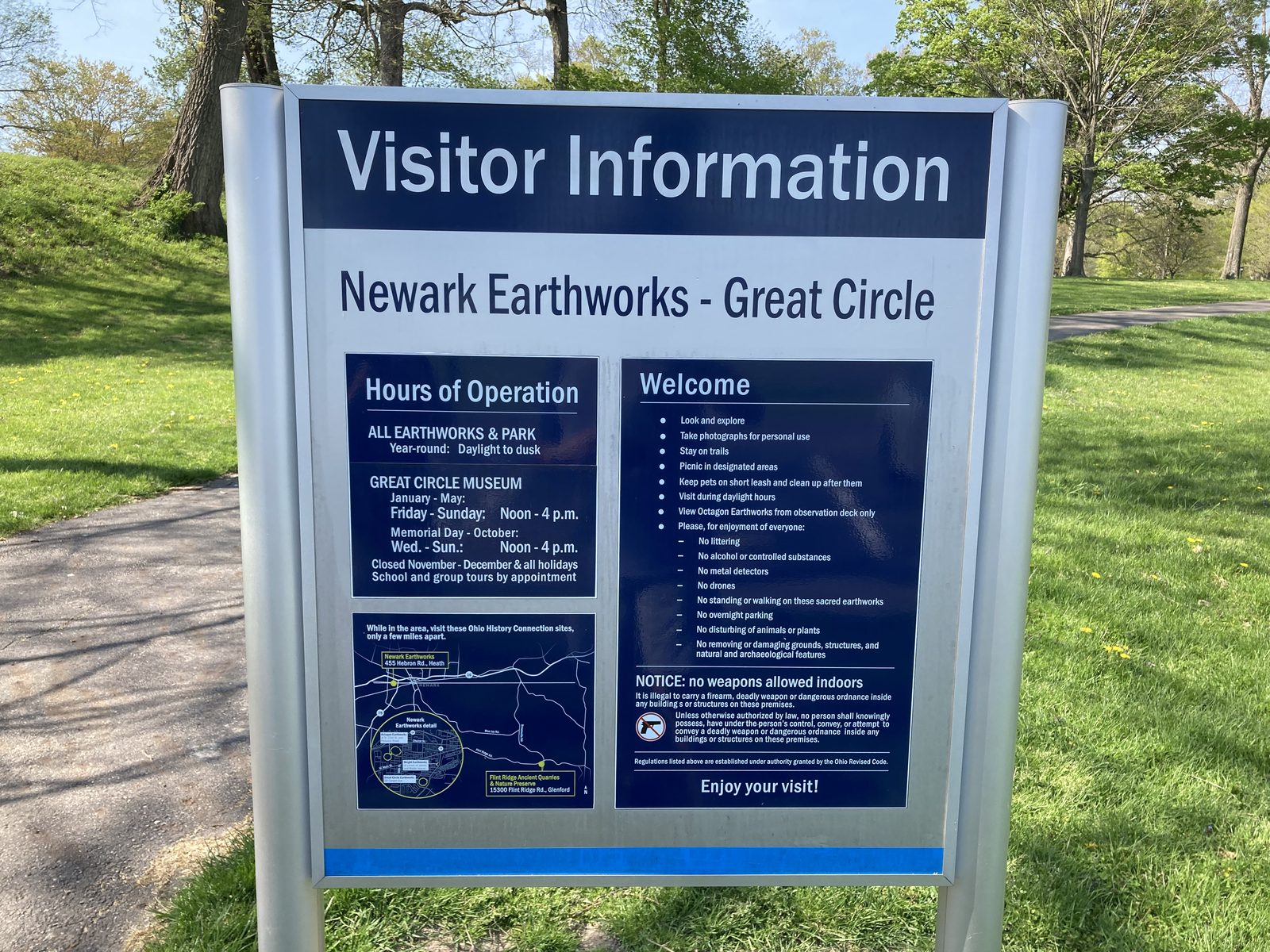
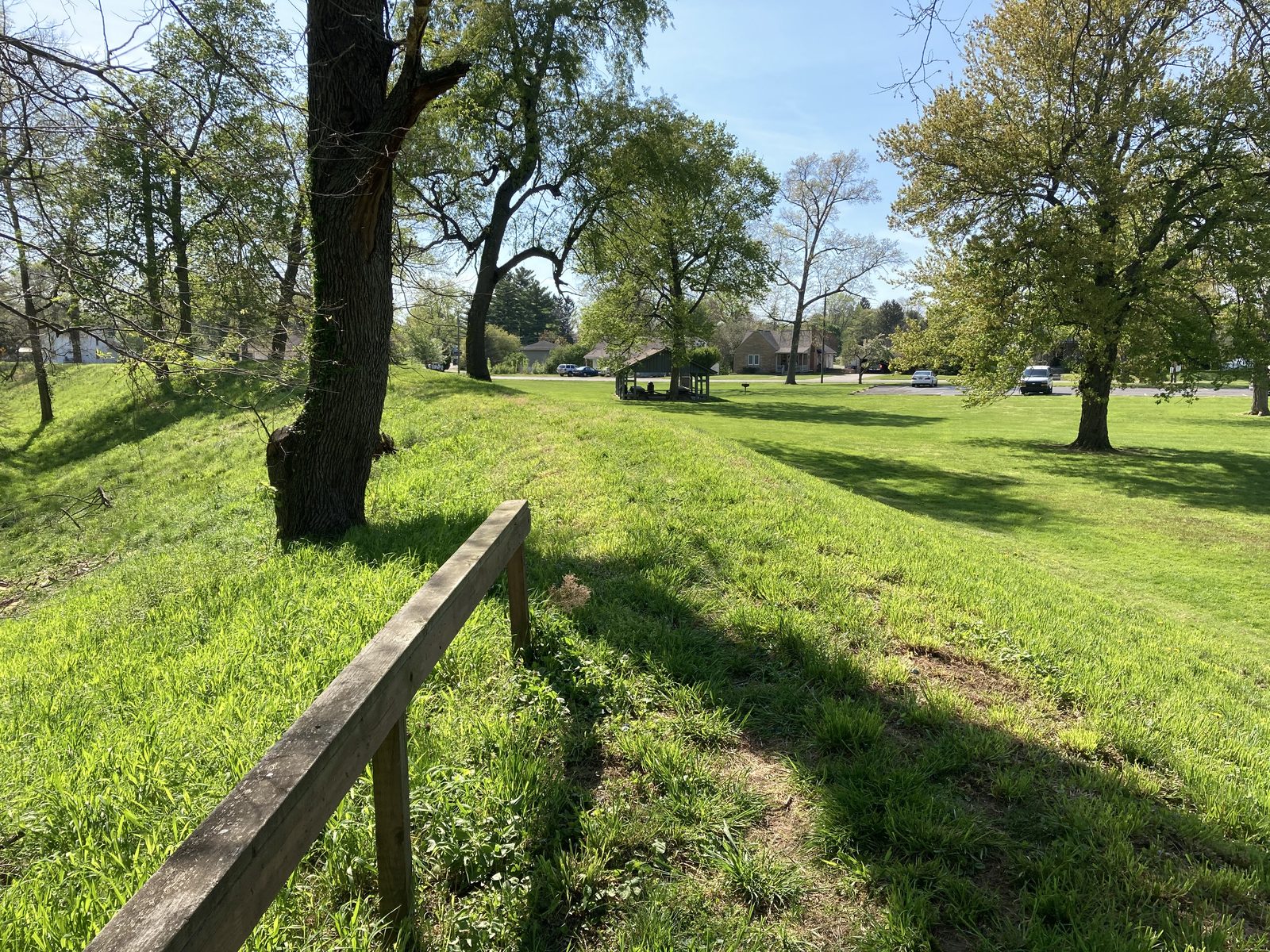
After lunching in Granville at the Three Tigers Brewing Company and visiting Chet’s sister (photo 10), the explorers ventured off to Newark and toured the Great Circle at the Newark Earthworks (photos 11 and 12). The earthworks will soon be a World Heritage Site.
Having completed the reconnaissance mission, it was determined that an arrowhead expedition could be planned for the fall season for all Bashers (Maxi-Bash?) when the fields are plowed and the recon party is fully recovered!
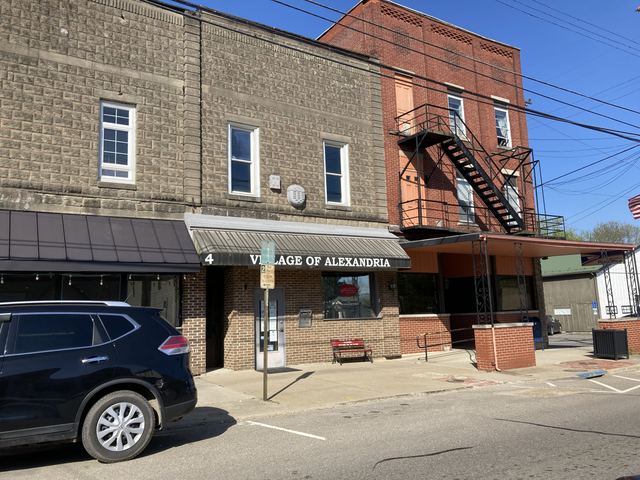 Photo 1 - Scenic Alexandria, Ohio is not only the hometown of the Lincoln Alumni Sergeant-at-Arms, but also the birthplace of the first Bash.
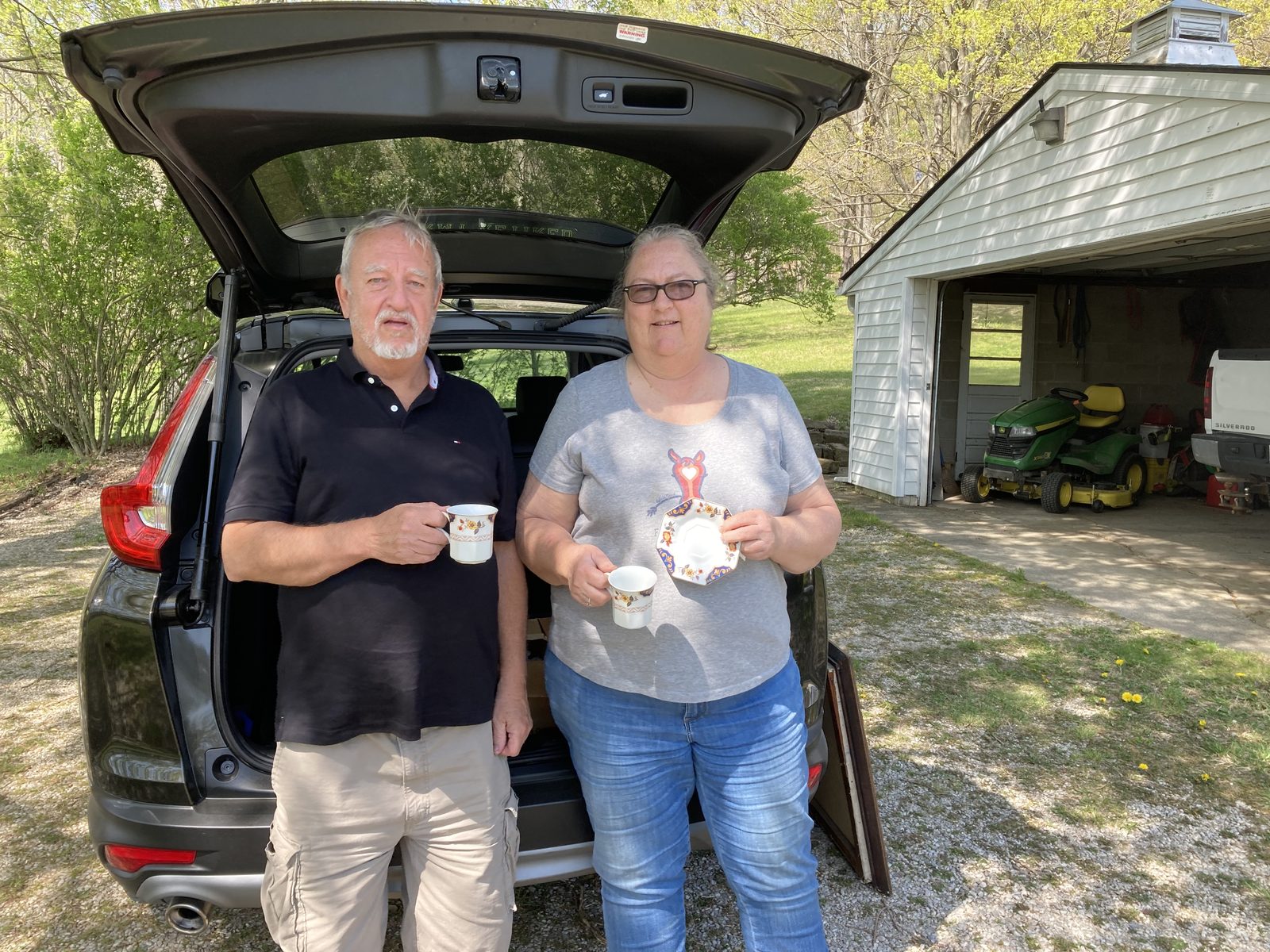
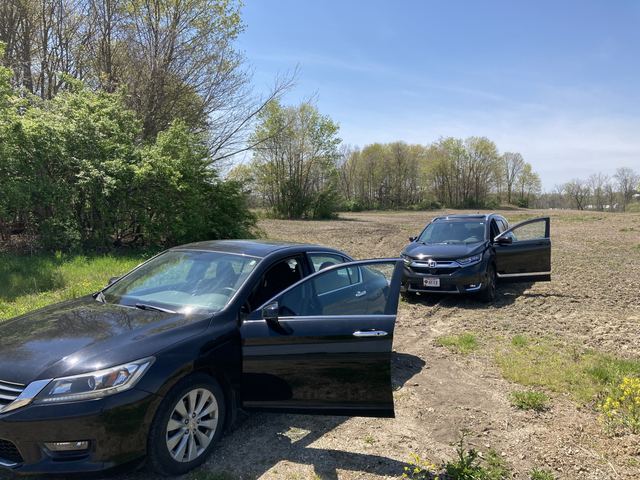 Photo 2 – Chet and Corf parked their vehicles at the family farm on April 24 as they performed a reconnaissance mission regarding the location of ancient arrowheads and ancient Bash sites.
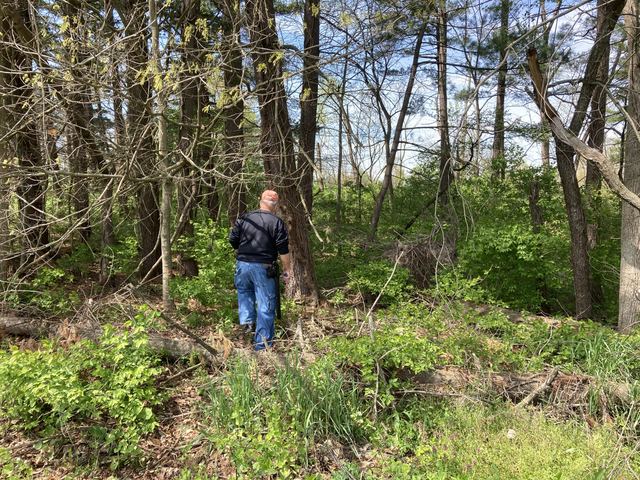 Photo 3 – The absence of key terrain features created challenges for the Lincoln Alumni forensic archaeologists.
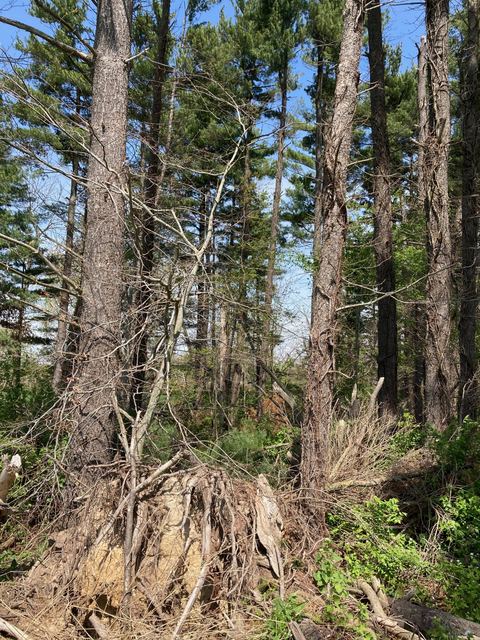 Photo 4 – The pine woods were a lot taller than during the campout days, Chet recalls, and created a natural obstacle course.
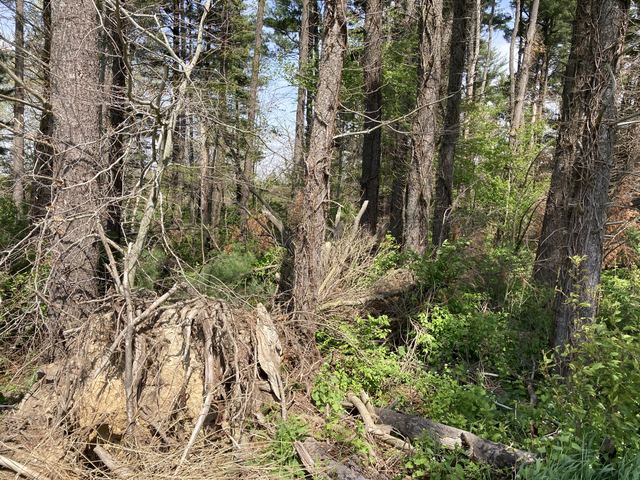 Photo 5 – The long-forgotten cabin site was painstakingly tracked by means of a virtual sextant, soil-sniffing and Chet’s spiritual gift of dead reckoning.
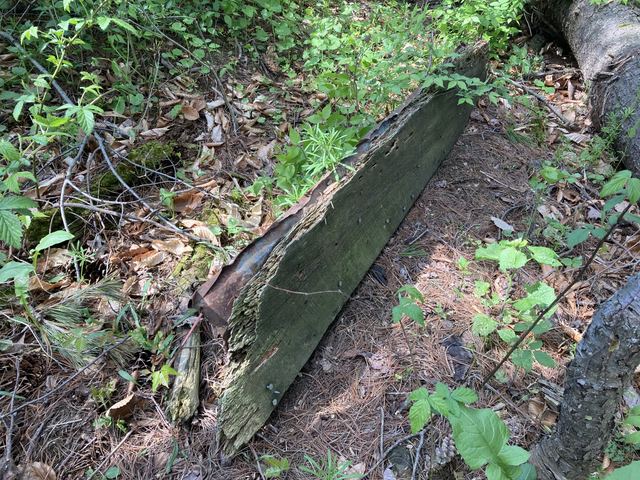 Photo 6 – A rotting 2”x12” board told the tale of a once-proud cabin that had succumbed to the ravages of nature over approximately six decades.
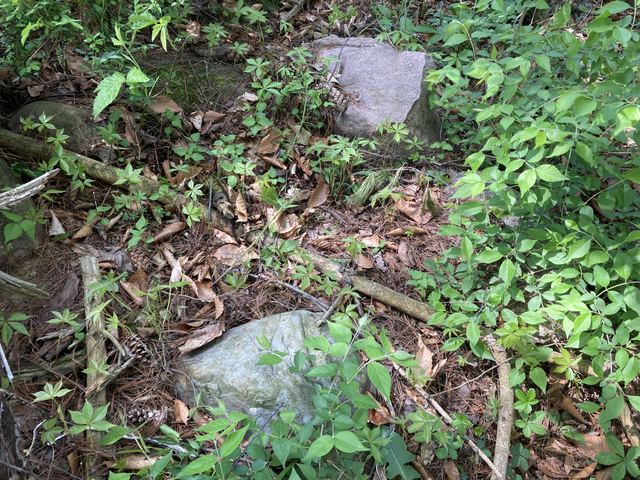 Photo 7 – Upon discovery of the original Bash fire pit, the first Bash site was confirmed!
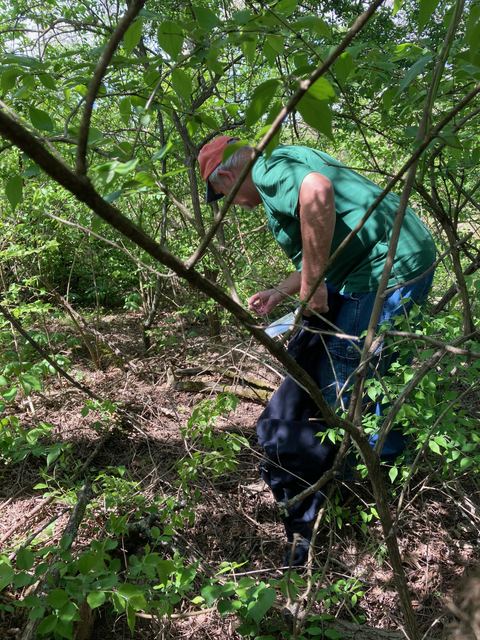 Photo 8 – The arrowhead hunting expedition was hampered by the disappearance of an ancient Indian marker tree. Nevertheless our archaeologists utilized their dibble sticks and pressed on with the search.
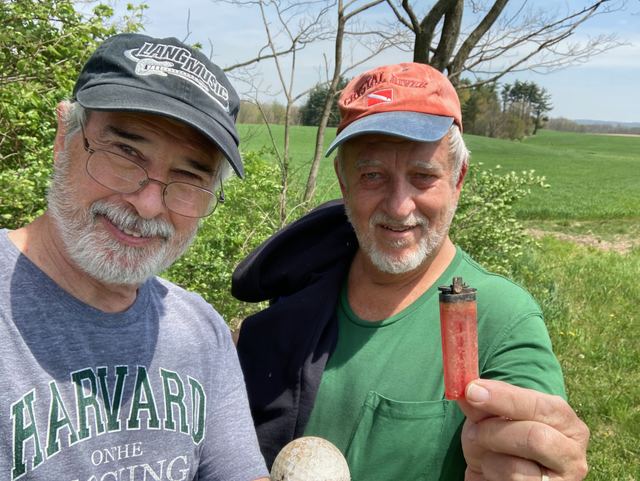 Photo 9 – At last the digging bore fruit as Chet discovered an ancient Shawnee fire-starter and Corf unearthed a ball he believes was used in an early version of lacrosse.
 Photo 10 – Chet paid a visit to his sister Robin after lunch and presented her with some ancient family artifacts.
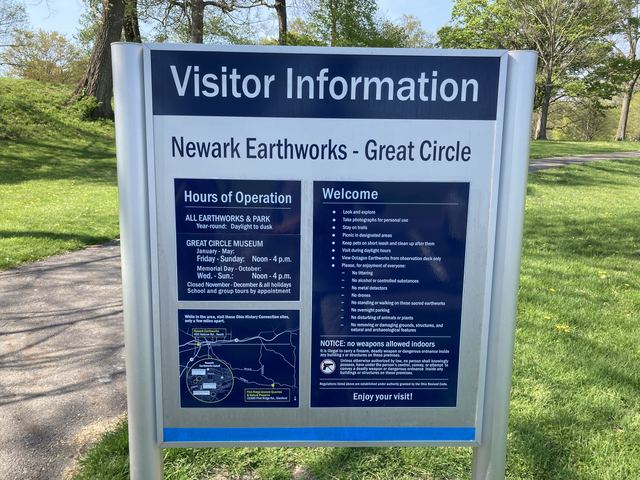 Photo 11 – Chet and Corf’s mini-Bash was topped off with a visit to the Great Circle Earthworks in Newark. The earthworks will soon be a World Heritage Site.
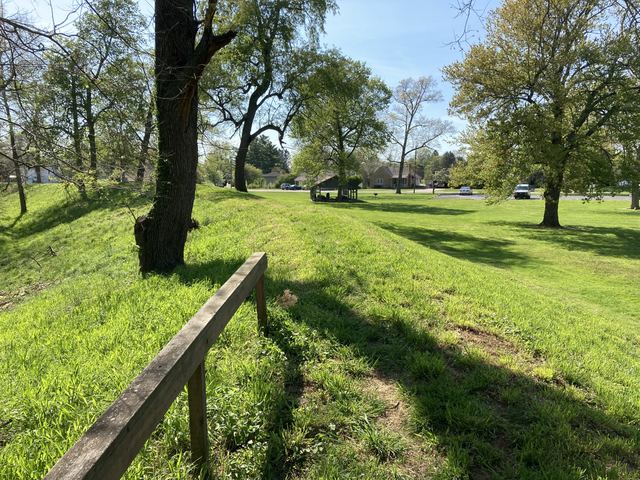 Photo 12 – Chet envisions the first Bash site being restored and developed into something along the lines of the Great Circle Earthworks (pictured). Only time and the need for significant resources stand in the way of this ambitious project.
Photographic evidence and recovered
diary entry pinpoint First Bash in May 1969!
Just a few photos related to the first Bash at the Arter Farm are known to exist, and together with a recovered diary entry from the Arter Archives (recovered in 2025) provide evidence that the First Bash took place on May 10-11, 1969. Surviving Lincoln Alumni recall the weekend with fond memories. We are indebted to the Arter Archives for providing these priceless photographs of a time that can be fondly remembered but not revisited without a time machine or psychedelic assistance.
2023 Dublin minibash explores history, architecture and the Canadian wildfires; plus 21 seconds of fame
The Dublin minibash of 2023 was a scheduling nightmare, as rainy forecasts caused the event to be rescheduled not just once but twice. The original date of June 13 was moved to June 27, but with rain still likely and Chet suffering from bronchitis, Wednesday, June 28 looked much more favorable.
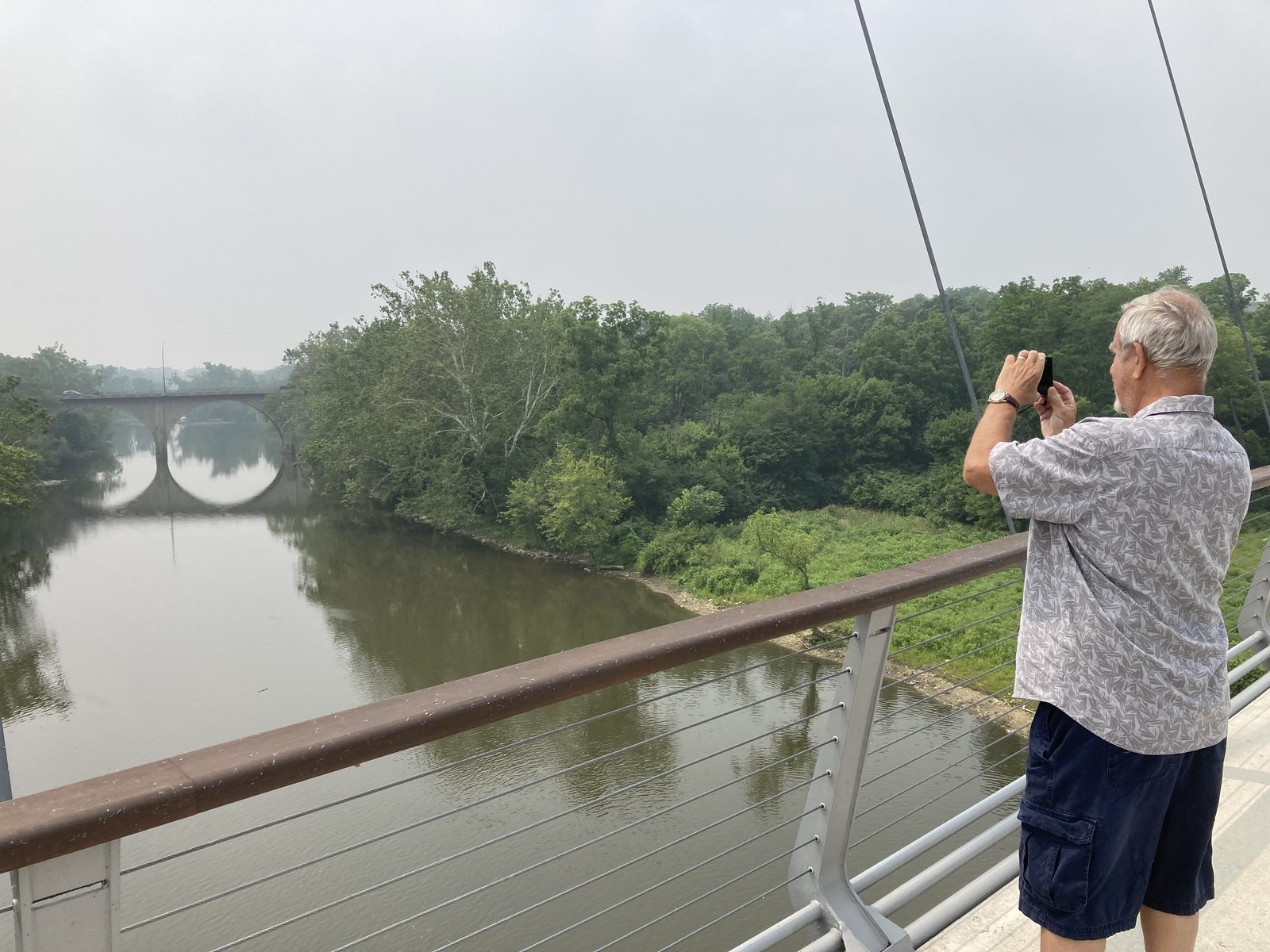
And June 28 turned out to be beautiful day, albeit strangely smoky thanks to raging wildfires in Canada that wafted across the border to the U.S., giving the sun a reddish cast and making the landscape look foggier than Corf’s childhood memories. As it turned out, this strange phenomenon may have been the catalyst for newfound celebrity for minibashers Chet and Corf.
You see, the duo met at Scioto Park to take in the sights, have a nice meal and perhaps a few adult beverages in the town where Mr. Chet was born. Little did they know that they would be sought out by a Columbus TV station for their opinions and observations on the Canadian Peril.
Chet noticed the smoky conditions on his way down from Cleveland, noting that visibility was quite low when he passed near Mansfield. Corf had been alerted by son Colin ahead of time that unhealthy conditions existed, but figured some of the offending smoky material surely would be washed out of the sky by recent rains. While wandering around Dublin they noticed one or two people wearing masks, but otherwise it seemed like a normal day with the lights dimmed down a few notches.
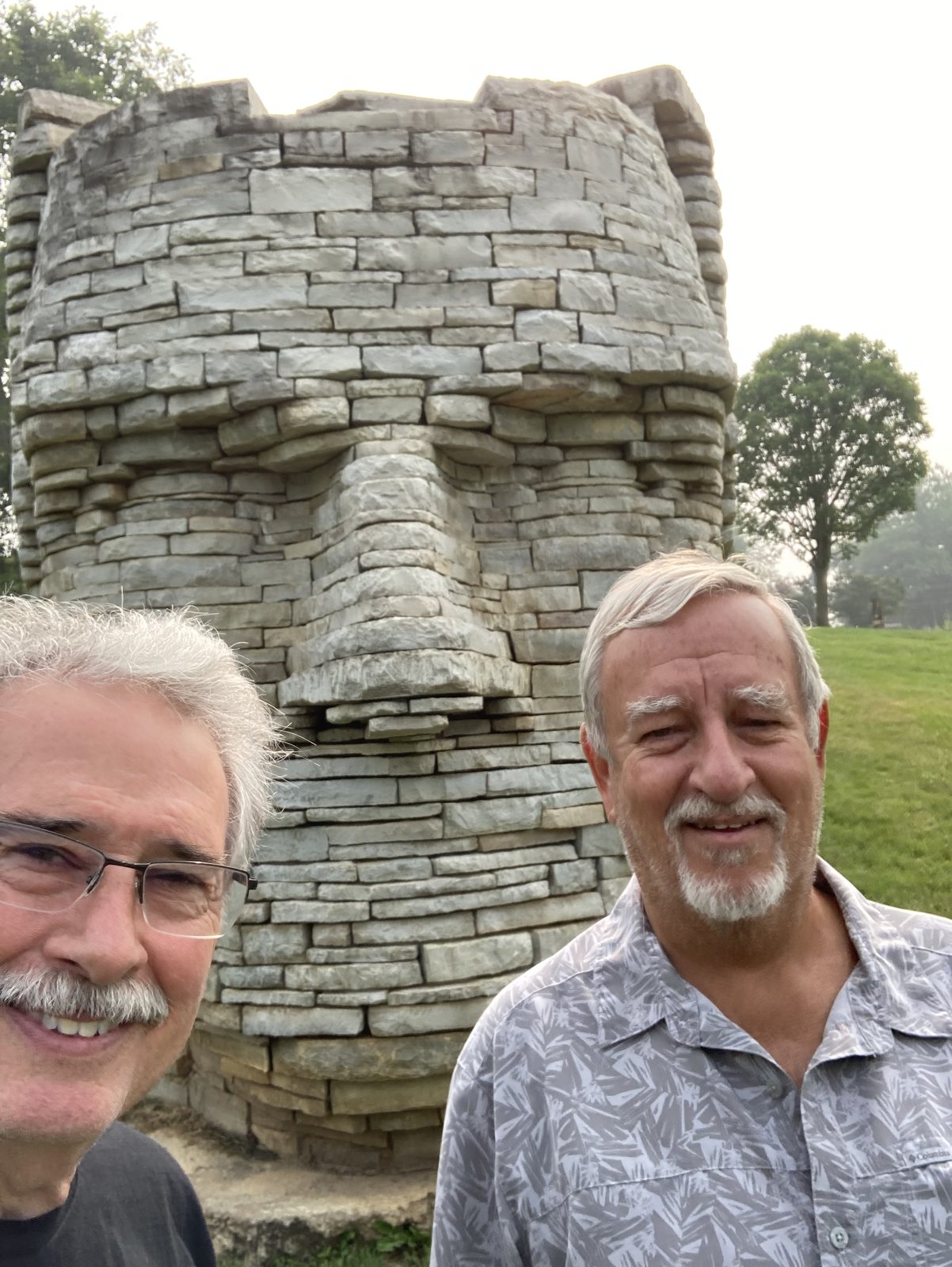
The minibash began at 10 a.m. when Chet and Corf met at the Chief Leatherlips monument in Scioto Park. Chief Leatherlips (1732-1810) was a Wyandot Indian leader who favored peace with the white settlers and also wanted harmony among the Indian tribes. He was a signer of the Treaty of Greenville, but ran afoul of Shawnee leaders Tecumseh and Tenskwatawa (aka The Prophet) and was executed on trumped-up charges of witchcraft. Chief Leatherlips had three Indian names but came to be known among the whites as Leatherlips “because of his admirable trait of never breaking a promise.” Ironically, the stone monument by artist Ralph Helmick does not feature any discernible lips on Chief Leatherlips’ visage, but the monument allows visitors to view the Scioto River from atop the chief’s head.
Along the banks of the Scioto, Chet and Corf talked with a young man who had been fishing from a kayak that morning. He said he had caught several nice smallmouth bass in the shallow waters.
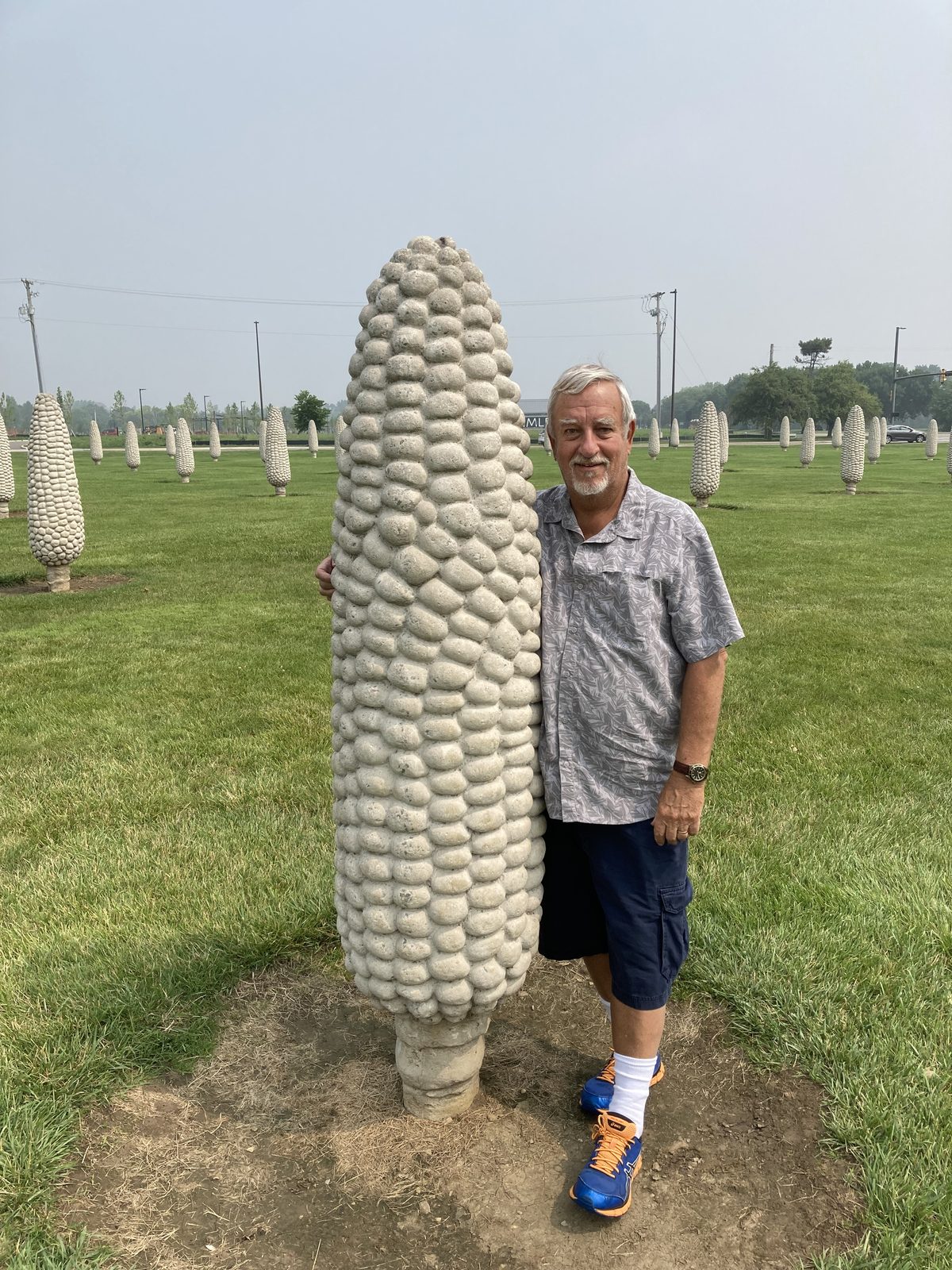
Chet handled the driving duties as the Lincoln Alumni duo visited another artistic creation, known as the Field of Corn and featuring 109 human-sized ears of corn (made from concrete) in a field where real corn once was grown. It’s a commentary about our collective journey from an agrarian society to one focused on industrialization and technology. Chet and Corf enjoyed viewing the corn from the shade of a grove of osage orange trees, where a series of plaques tell the story of this unusual creation. A click on a QR code takes visitors to a website where artist Malcolm Cochran explains his artistic process. Chet and Corf enjoyed the cornfield but would have opted for some real corn plants in the mix, and perhaps some solar panels to inspire thoughtful contemplation on the part of visitors.
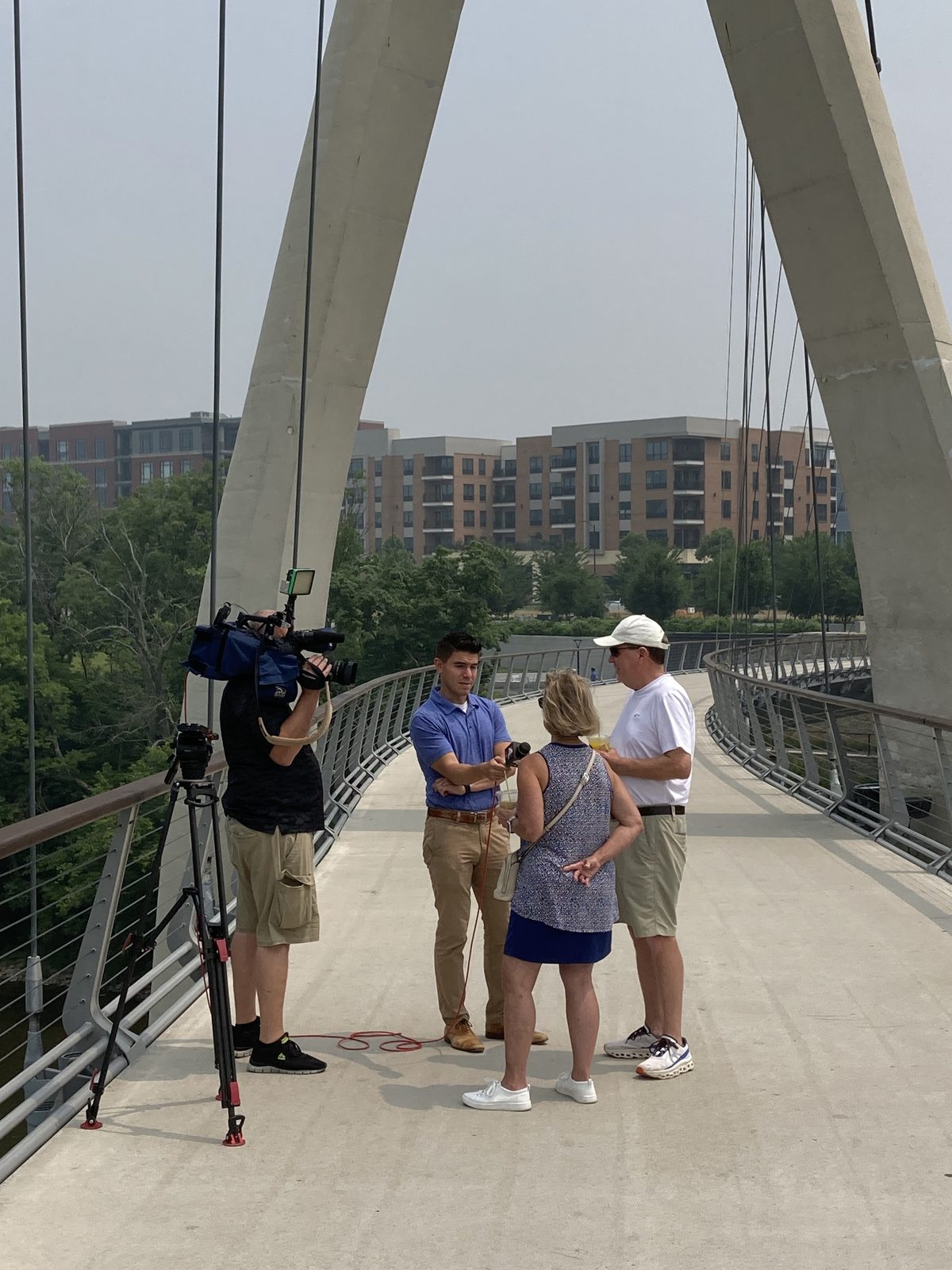
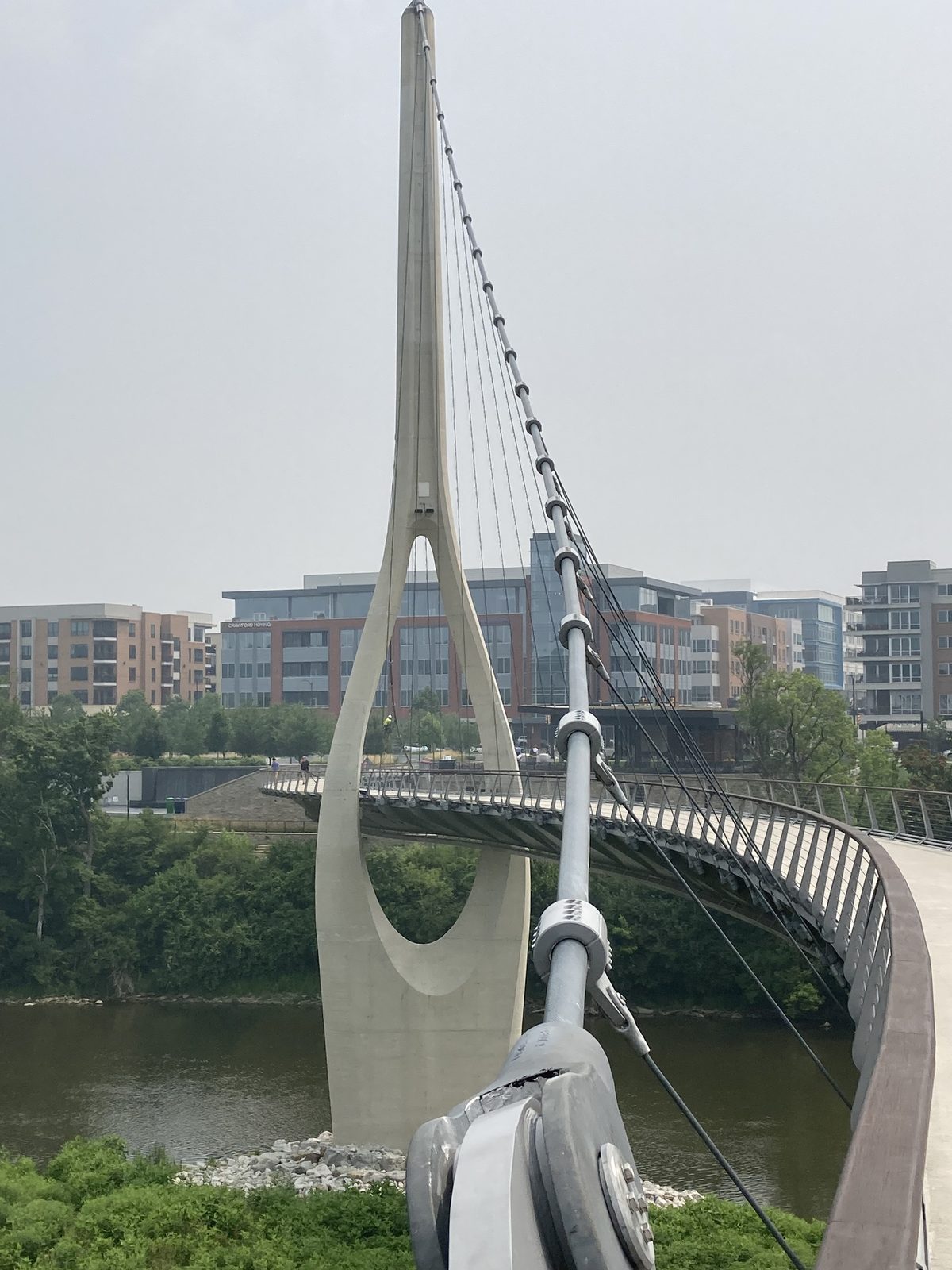
Moving on to downtown Dublin, the minibashers visited the famed Dublin Link pedestrian bridge across the Scioto. The 760-foot bridge features an “S” shape and is a true suspension bridge. The 14-foot wide deck passes through the “keyhole” of the main tower which is 169 feet tall and from whence numerous suspension cables support the deck.
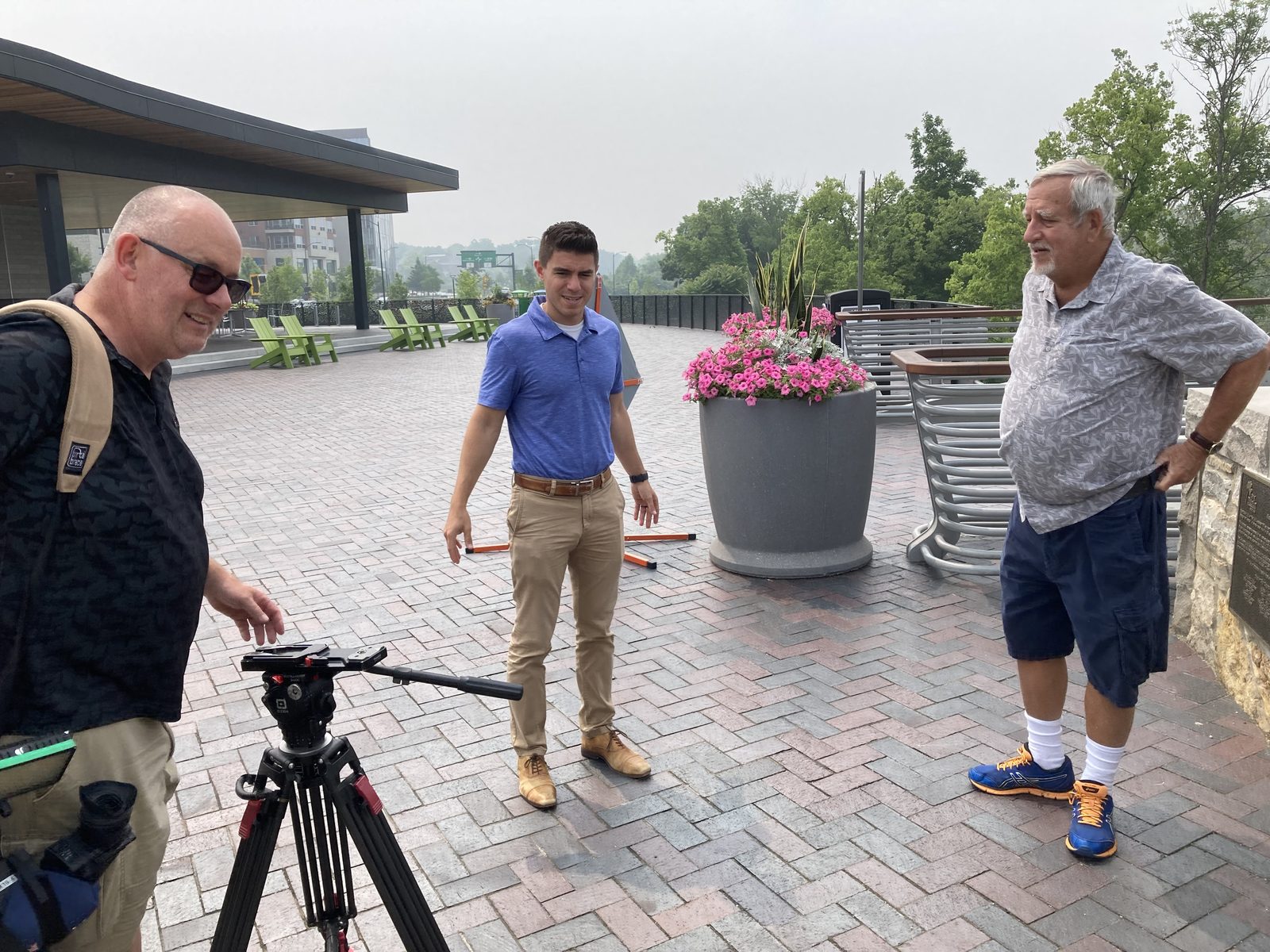
It was at the entrance to the suspension bridge that Chet and Corf were approached by two men from WCMH NBC4 and asked how they felt about the air quality warnings prompted by the migration of smoke from Canadian wildfires. Chet related how he had encountered very dense smoke while driving through the Mansfield area, and Corf commented on the unusual reddish appearance of the sun amid the atmospheric mayhem. Off-camera the OU grads indicated they had no preexisting conditions and were too tough to worry about a little smoke from up north. They exchanged pleasantries with Eric Halperin, the interviewer, and John, the cameraman, and shared their oft-told story of longtime friendship that began at Ohio University many years ago, and subsequent Bashes and minibashes through the years.
Later Chet and Corf saw the crew interviewing other people on the bridge and assumed they would never make the newscast.
However, that evening Chet and Corf were featured in a 190- second segment about the air quality in central Ohio. Reporter Eric Halperin appears at about 1:47 discussing the local situation, and the Lincoln Alumni can be seen from 2:22 to 2:45 of the report, which lives on via youtube and can be seen at the link below:
https://www.youtube.com/watch?v=ZQVAEuoLsBw
Twenty-one seconds of fame…. It was fun while it lasted!
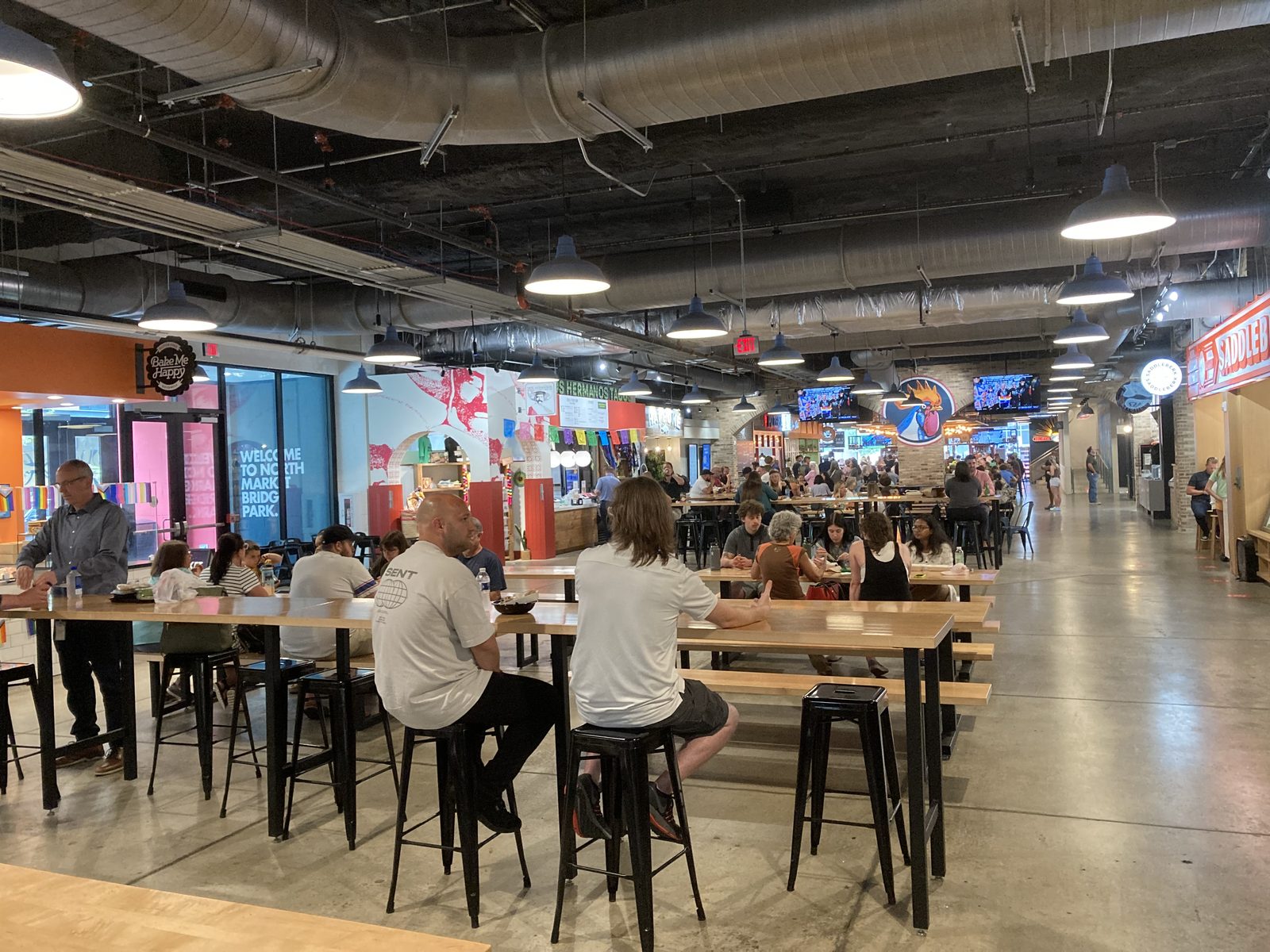
After walking around Dublin, and still thirsty from their interview, Chet and Corf quenched their thirst at a craft brewery in the North Market, and later honored their hunger for Irish food with a Guinness and good grub at Fado Pub & Kitchen. Dublin features a number of nice restaurants and watering holes as part of its Celtic Cocktail Trail, but because of their new celebrity status Chet and Corf decided to lay off of the drinking and avoid unwelcome attention. One final temptation beckoned, but as Urban Meyer’s Pint House didn’t open its doors until 4 p.m., the Lincoln Alumni stayed hydrated with nonalcoholic ginger beer while watching children frolic in the manmade waterfall near the suspension bridge.
Dublin is a nice clean city with lots of attractions and a relaxed ambience. Other destinations would love to have its “special sauce” that attracts important groups like the Lincoln Alumni. Perhaps another minibash awaits when the air is dry and the sky clears up.
Until then, inspired by their minibash, Chet wants to add a Chief Leatherlips monument to the Cleveland Guardians collection and Corf dreams of finding grant money for a pedestrian suspension bridge over Paint Creek in Greenfield.
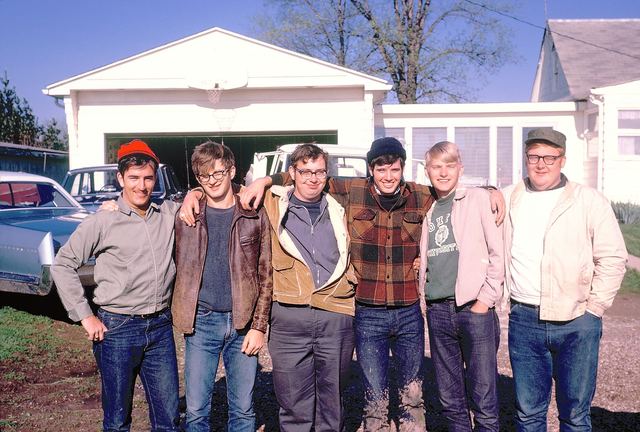 Participants in the First Bash included the above scholarly looking gentlemen, L-R: Chet, Zork, “Big Al,” Corf, Snoots and “Big Red,” the Resident Assistant who kept everyone on their best behavior. The mud on Corf’s jeans indicates recent rainfall and supports his belief that someone’s vehicle got stuck in the mud. Being a good Lincoln Hall resident, Corf joined the successful effort to push the vehicle out of the mud. He may have stood a bit too close to the rear wheels but didn’t seem to mind based on the grin he wore.
- Chet Arter has in his possession a 1966 photo of the Cabin, of which only small remnants were found in a 2021 archeological exploratory expedition. The Cabin was the centerpiece of dining and drinking festivities during that road trip which is generally considered the First Bash by scholars. Future Bashes became more genial and family oriented as the Lincoln Alumni gained maturity and the resources to pay for nicer accommodations.
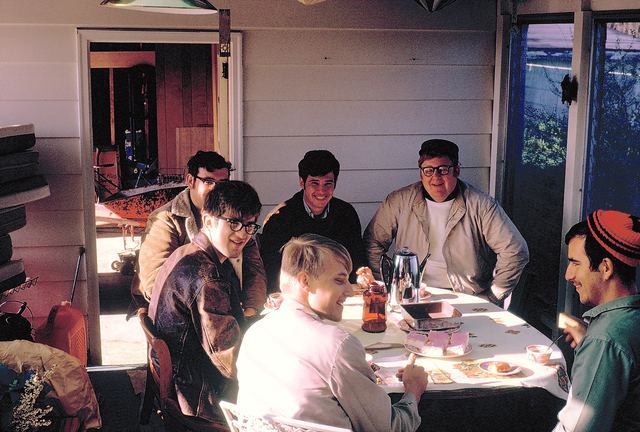 The only other First Bash group photo features the same participants gathered around the dinner table for a meal prepared by Mrs. Arter. Chuck Snoots is the blond in front, and proceeding clockwise are Zork, “Big Al,” Corf, “Big Red” and Chet.
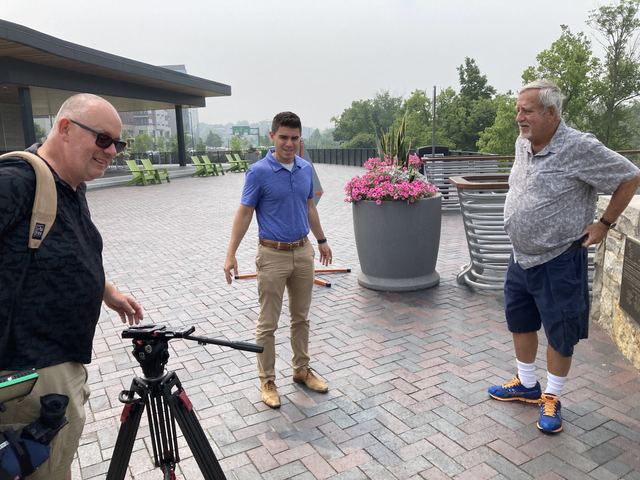 John and Eric of NBC4 prepare to interview Chet.
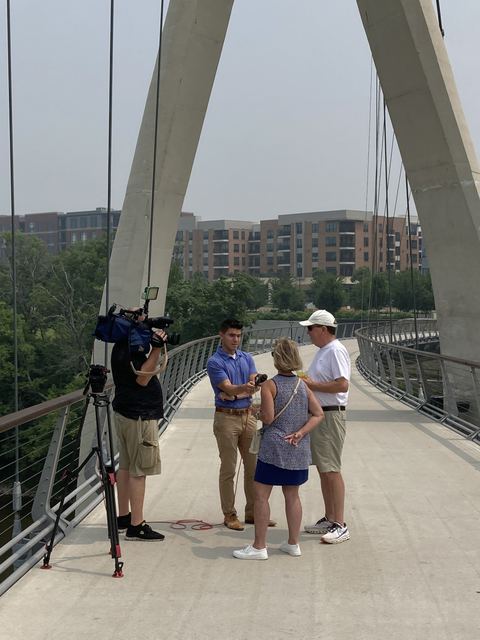 Other visitors offered comments on the Canadian fire peril.
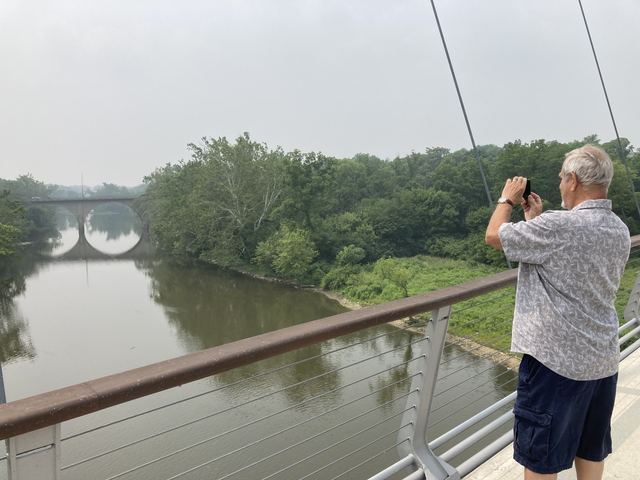 The smoky air on June 28, 2023 can be discerned in hazy photos.
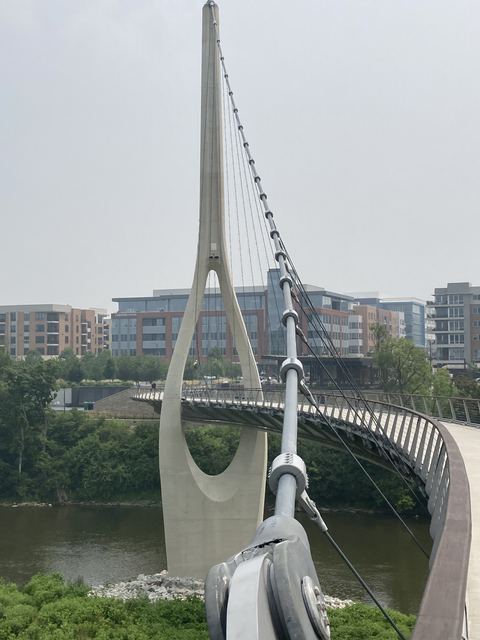 The Dublin Link pedestrian bridge passes through a "keyhole" in the main tower.
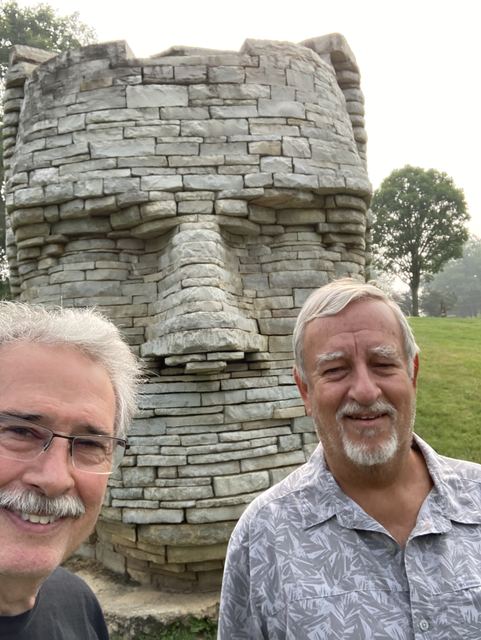 Corf and Chet at the Chief Leatherlips Monument at Scioto Park.
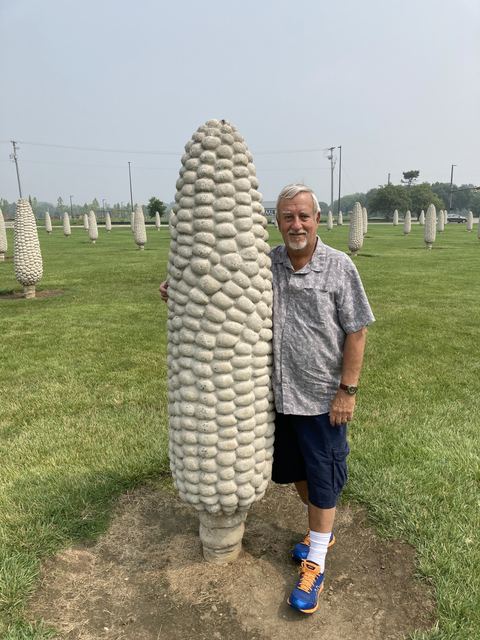 Chet at the Field of Corn in Dublin.
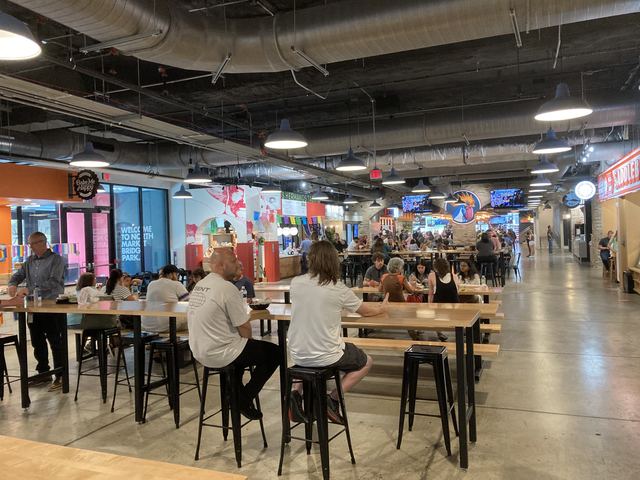 The North Market offers mini bashers an opportunity for rest and refreshment.
2023 Michigan minibash results in fine fishing and great memories
By Corf
Call me Ishmael. I’m a landlubber from Ohio with some extensive pond fishing experience in my formative years but very little involvement in the much deeper waters of the Great Lakes. In the late 1990s I got very seasick catching perch in a bobbing charter boat on Lake Erie. My friend Chet and I even got our fishing lines wet in Lake Michigan some 40 years ago from a dock or pier, with nary a bite to show for our trouble. However, I can name all of the Great Lakes thanks to a verse in Gordon Lightfoot’s epic, “The Wreck of the Edmund Fitzgerald.”
In August 2023 Chet and I got another chance to fish the Great Lakes when our former OU housemate Zork invited us to join him at his Pentwater Lake cabin and venture out on Lake Michigan in his 23-foot boat, Shibumii (the successor to Shibumi, which in Japanese loosely translates to “effortless perfection”). With a capable captain in charge, this turned out to be a wonderful trip!
The genesis of the trip involved some proposed rest and recreation for Rick, another OU buddy who was experiencing health issues. Zork thought Rick could use a break and proposed a fishing excursion. Rick is a lover of the outdoors, a former lacrosse teammate of Zork’s and a great all-around guy, but unfortunately he had to pass up the trip due to his medical issues. Zork graciously invited Chet and me anyway, suspecting that we were the only other members of the prestigious Lincoln Alumni organization remotely interested in arising at 5 a.m. to brave the unpredictable conditions on Lake Michigan that sometimes involved three-foot waves and unexpected “roller” waves that can turn one’s stomach inside out.
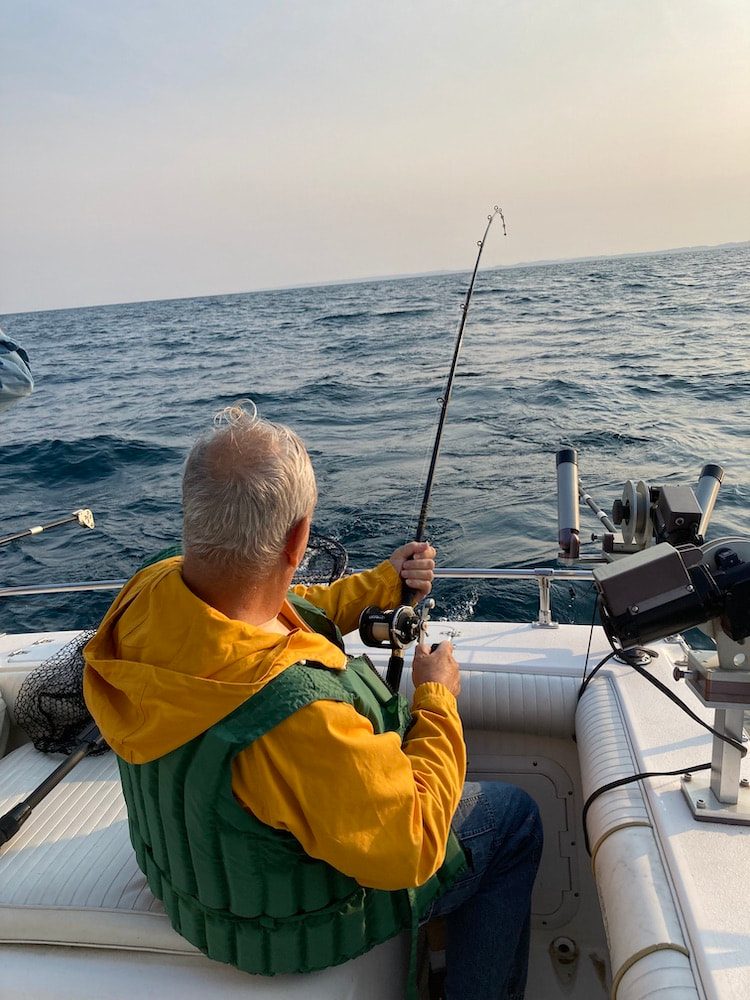
Looking back, I can testify that the early hours, sometimes unsettling waves, and even a disorienting fog bank that tiptoed in one morning were worth it. In fact, on the first day out we had a hit at about 7 a.m. – before Zork was able to do his traditional “Wetting of the Net” ceremony. Zork noticed the twitching rod, quickly handed the fishing pole to me and reminded me to pull the rod upwards, then crank the reel like crazy as I let the rod down a little. I started to gain a bit on my unseen adversary, but then it would dash off away from the boat, stripping more line from the reel. I pulled and cranked, then held on while the reel gave up more line to the fish.
This feels like a big one, I thought, even then wondering if I would ever get to catch a glimpse of the fish. I have lost about as many fish as I ever caught on occasional trips to Canadian lakes as well as fishing the Boundary Waters Canoe Area in Minnesota.
The battle lasted a good 20 minutes, but it felt like much longer than that. Finally I could see a large, shiny fish surface briefly near the stern of the boat. With some more cranking and coaxing, I got the behemoth close enough for Zork to net it.
As soon as he laid the net down in the Shibumii it was apparent that the big fish no longer had the hook in its mouth. The green dolphin fly was in the net, maybe six inches from the fish’s mouth. If that had happened a few seconds earlier, I would be telling you about the big one that got away.
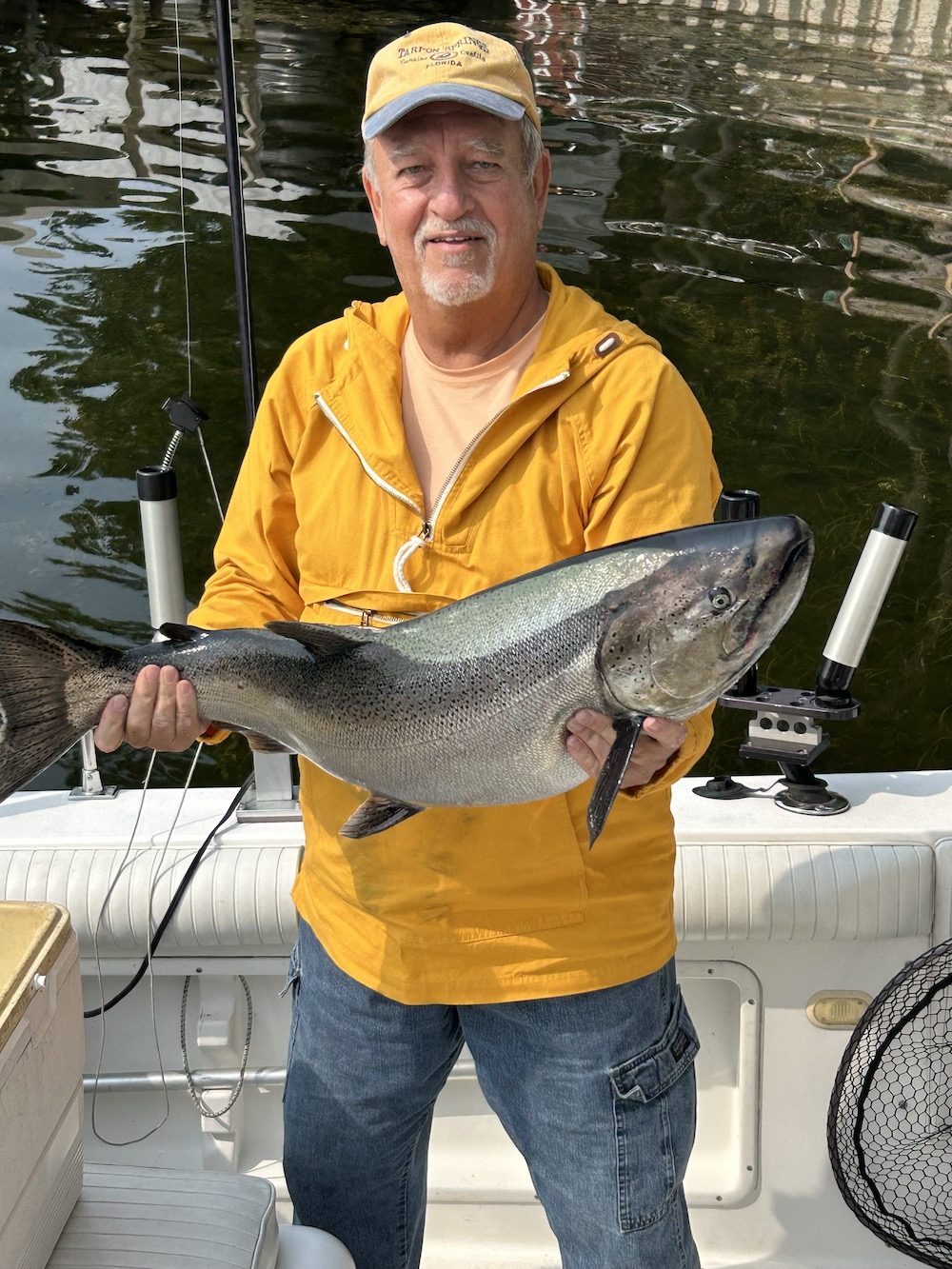
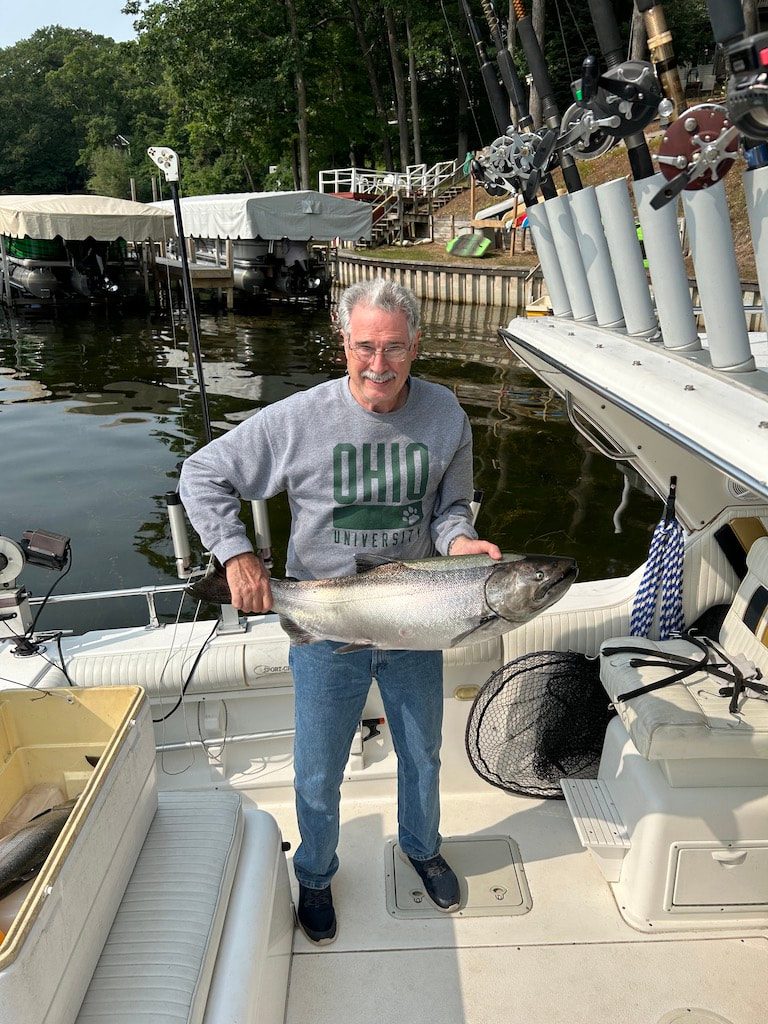
Our host identified the lunker as a king salmon (aka chinook) and later, Zork weighed and measured my prize, declaring it to be 19 pounds and 37 inches in length. It was by far the biggest fish I have ever caught.
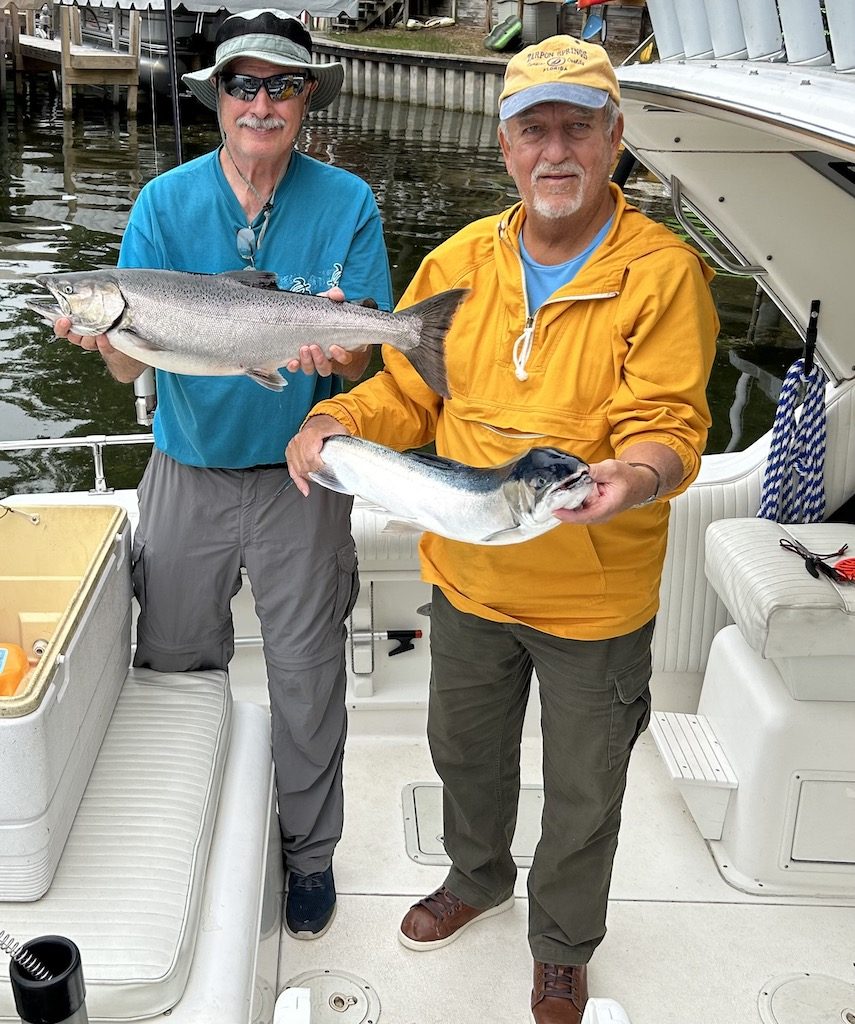
Soon another fish caused the line to twitch, and this time Chet took the rod and began the battle. When Zork saw the fish rise to the surface, he estimated it at 10 pounds. It battled gamely, but was no match for Chet’s angling skills (it’s believed he has a Boy Scout fishing merit badge somewhere in his archives). Again Zork worked his magic with the net while I tried to keep the Shibumii moving in the right direction. Zork identified the fish as a nice coho salmon, explaining that the mouth of a coho is white while the king salmon’s mouth tends to be black. There are also some telltale identification marks on the tails of the different salmon species.
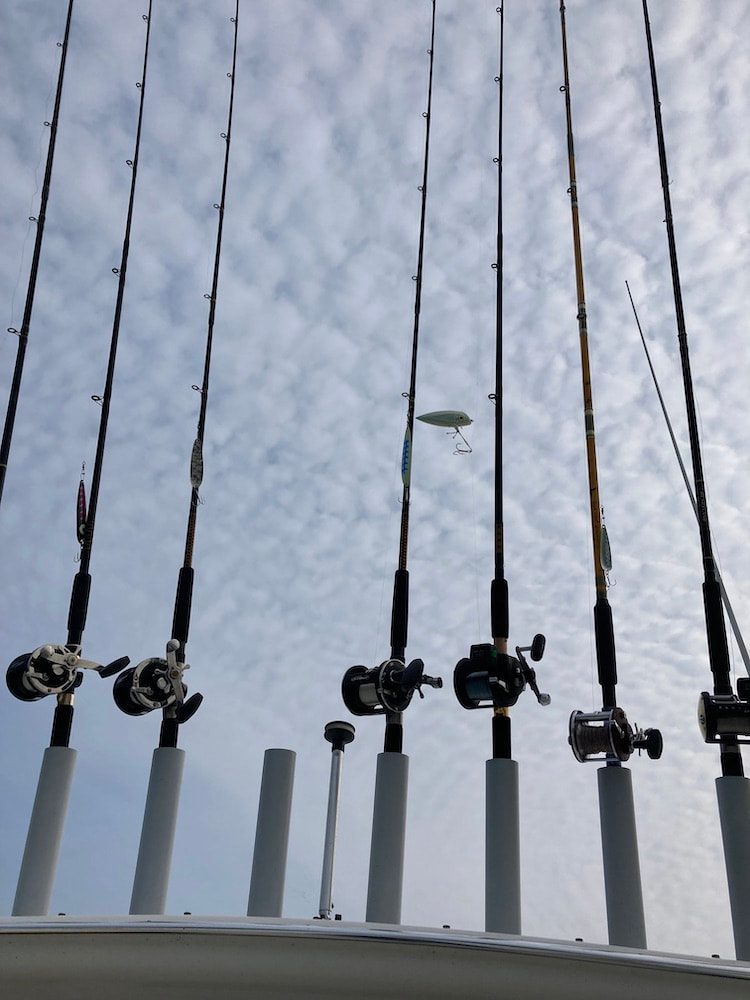
Fishing in Lake Michigan is far different from what I have experienced at farm ponds, creeks, rivers, and more northern lakes where panfish, bass, northern pike or walleye are the primary targets. Those environments call for traditional fishing gear with light gauge line and small, shiny lures or live bait. To catch salmon in Lake Michigan one needs bigger rods and reels and a nice boat capable of trolling the waters without stopping.
The salmon of Lake Michigan can be found anywhere in the lake, but typically enjoy water where the temperature is somewhere between 42 and 65 degrees. Depending on the wind and other weather variables, the target temperature might be found at any depth. Sometimes a persistent wind can cause the waters to invert, thus causing the salmon to relocate much deeper than normal. Zork’s boat comes equipped with devices to determine depth and temperature, and can even locate fish from time to time.
And while each fisherman is entitled to fish three poles at a time, it’s a complicated process. To get a green dolphin fly to sink to 50 or 70 feet below the surface requires the aid of a “cannonball,” a weight of about 10 pounds that has its own separate downrigger line to take the lure to the desired depth. When a fish strikes, by some miracle of engineering the cannonball disengages from the fishing line and the battle is on! Zork gamely kept the boat traveling in the right direction, put the fishing lines and cannonballs out, tended the net and maintained the peace on the Shibumii throughout our three days of fishing. Without his guidesmanship, Chet and I surely would have been wrapped up in backlashes and lost at sea!
Usually the fishing sessions lasted from a little before 7 a.m. to 1 or 2 p.m. And even with six fishing poles in use we were not constantly reeling in big salmon. We caught some nice king salmon and coho, and some smaller cohos as well. And Chet reeled in one steelhead trout, a beautiful fish in its own right. When we had a hit from a fish, Chet or I took over the pole and sometimes it immediately went slack, the unseen fish having spat out the hook and escaping. Sometimes we had a battle on our hands for a few moments and then the line went slack. Once, I had another big one on but slipped and nearly fell down, inadvertently pointing the tip of the rod right toward the fish – a serious error that made it much easier for the fish to break the line. When the line suddenly snapped I realized that another big one was gone.
Zork figures that on an average day fishing Lake Michigan, about half of the strikes turn into netted fish in the boat. I think Chet and I fared a little below average, and suspect that Zork’s grandkids are better fishermen than his old roommates. But we enjoyed the experience!
When the fish weren’t biting, Chet, Zork and I had some great conversations. And though we have known each other since 1967 and seen one another nearly every year since graduating in 1971, a lot has transpired for all of us in the ensuing years – more than can be covered in a regular Bash. So I found it valuable to learn more about Zork’s career as a master scientist, his experiences in the corporate world and as an entrepreneur doing research for various companies including some of the biggest of the big. Likewise Chet has had some adventures in the business world and the military world too. Of all the guys I bonded with in college, I think I’m the only one who stayed in or near his hometown and managed to have several careers ranging from newspapers and magazines to community relations director for a hospital to clerk of a court and finally as city manager. I shared some stories about those adventures, along with the expected bragging about my kids and grandkids. We talked about health scares and growing older. Zork filled us in on the latest selections being read by the Old Boys Book Club. It appears the OBBC members enjoy good whiskey as well as good books, so this sounds like a fun group. Chet and I offered some suggestions for the club based on books we have read – and a few to avoid…
On Thursday – our last day of fishing – things got a little weird as a dense fog moved in. We kept watch for approaching boats and continued to fish, but the fish stopped biting for an extended period. I admitted to childhood fears from watching “The Incredible Shrinking Man,” and the role of fog in the process. And the fog seemingly caused hallucinations as Chet and I both thought we saw buildings in the white vapor. The mirages seemed more realistic than the unresponsive fishing lines. And large “roller” waves rocked us back and forth but our stomachs remained calm. At one point a real boat emerged from the fog not far from us, but thankfully no collision took place.
To counteract the disinterest of the fish, we decided to take drastic action and the three of us spontaneously broke into an a capella version of the Ohio University Fight Song. Zork, who noted that any references to OU while in Michigan might be misconstrued as praise for the Ohio State University, seemed a bit skeptical but nevertheless sang along. Almost immediately we began to get strikes and we finished up the final day’s fishing having reeled in two coho, one king salmon and one steelhead trout. Perhaps one day all of Lake Michigan will reverberate with fishermen of all races, religions and creeds singing “Stand up and cheer...”
Due to weather concerns, one of our scheduled four days of fishing was cancelled. Pentwater Lake seemed as calm as a mirror that day, yet our experienced guide Zork knew Lake Michigan better than we did. Stormy conditions caused waves up to five feet which he assured us would be a miserable experience. Instead of fishing, we explored Pentwater and engaged in conversations with several friendly shopkeepers about to wrap up the tourist season in early September. We met some Red Hat ladies in downtown Pentwater who get together each month for lunch and social time. One gave her name as Lois Lane and the other was called Diane. They posed for a picture with us and we made some enjoyable small talk. Stuff like this typically occurs at a minibash as we enjoy meeting people and the ebobcat needs content… We even paused to listen to the Pentwater Civic Band during one of their evening concerts. Our musical impresario, Krause, would have enjoyed the performance.
There were other excursions as well. We visited a nearby town called Ludington, home port of a massive ferry called the SS Badger that will take passengers across the lake to Wisconsin for a fee. While we didn’t have time for such a trip, during our explorations around Ludington and Pentwater we did some shopping and found several nice establishments offering food and libation.
Zork impressed us with his cooking skills, and prepared some of the salmon we caught by adding just the right spices and cooking the steaks on cedar planks that he had previously soaked in water to keep them from burning up. The salmon cooked in about 20 minutes under the hood of his grill, and the aroma of the cedar planks helped make for a magnificent meal! We had fresh corn on the cob and other complementary foods, and our host schooled us on the finer points of some bourbons and beers.
Each evening we spent our after-dinner hours sitting on the back porch, looking at Pentwater Lake and listening to the sounds of nature while continuing to reflect on our lives and the longevity of our friendships. It has been a good, long run. If Ernest Hemingway were still around, I think he would have enjoyed returning to Michigan to hang out with us.
So thanks, Zork, for generously hosting this great minibash. And thank you, Jan, for loaning Zork to us for this very special experience!
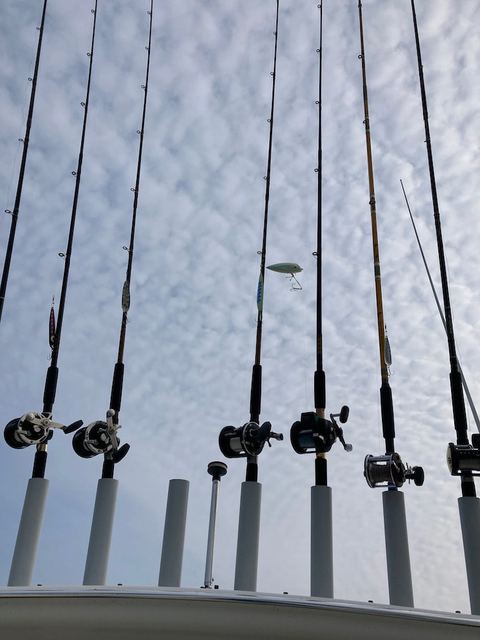 Some of Zork's fishing poles aboard the Shibumii.
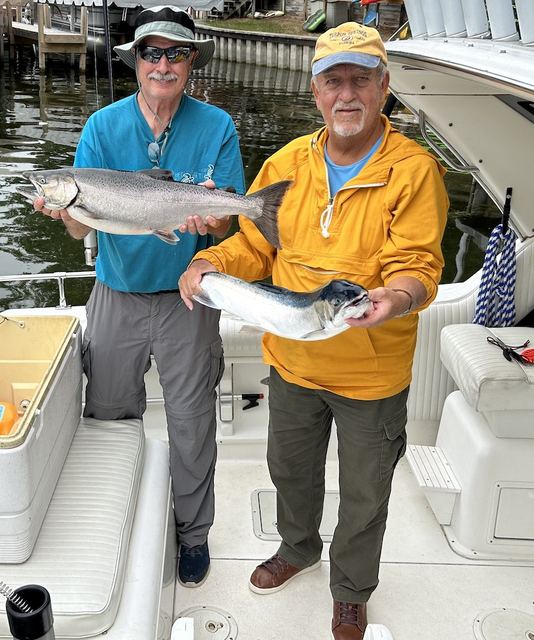 Corf and Chet show off some of the bounty of Lake Michigan.
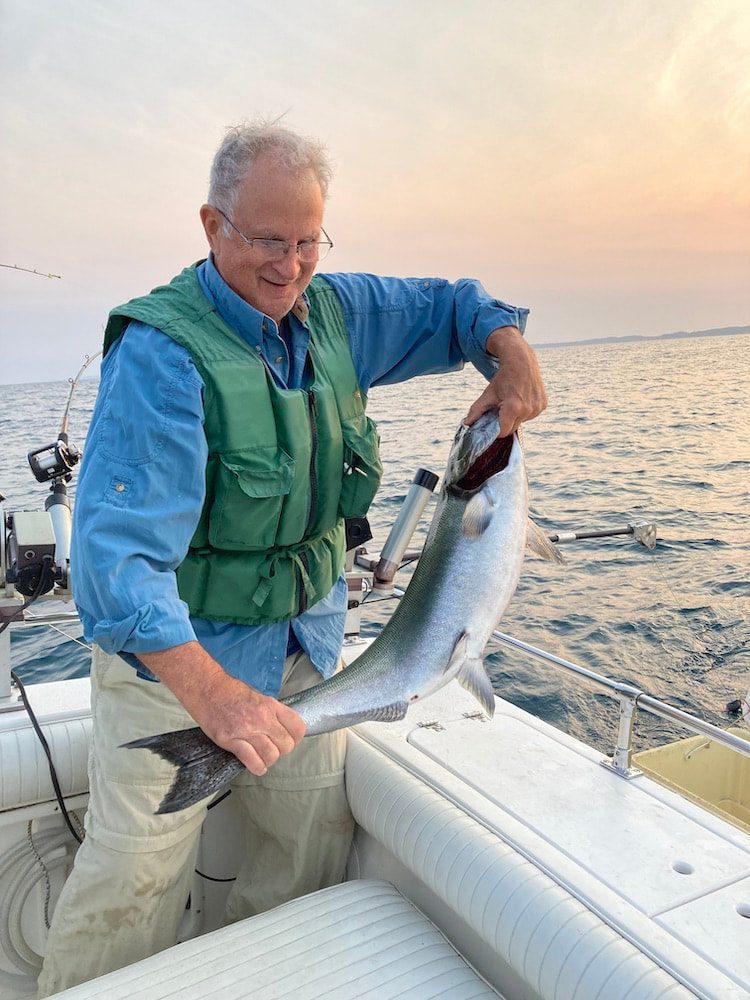
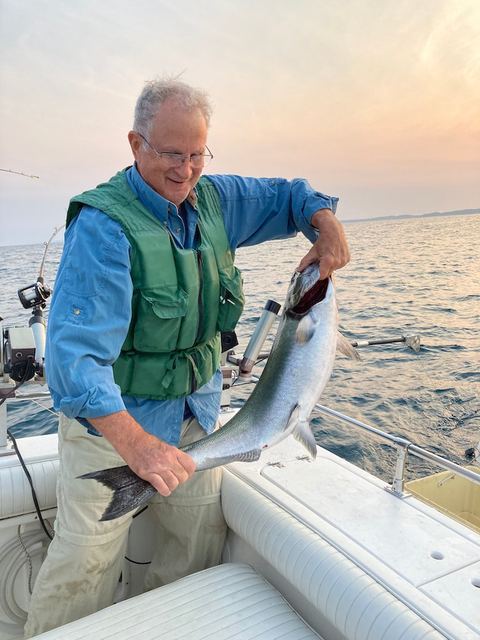 Captain Zork after netting a salmon for his buddies.
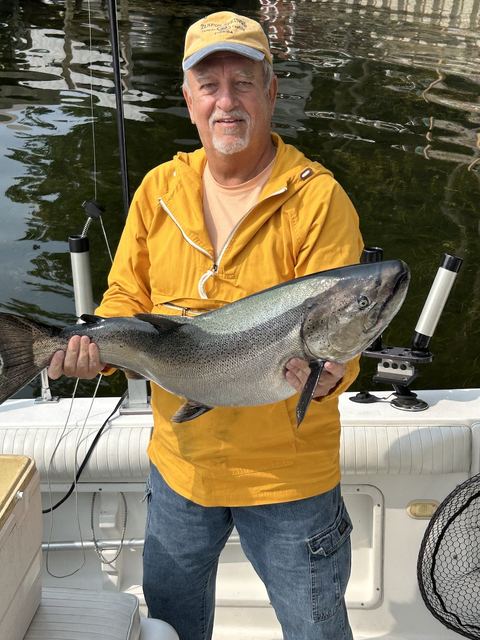 Chet's Boy Scout fishing merit badge skills came in handy on this Lake Michigan minibash!
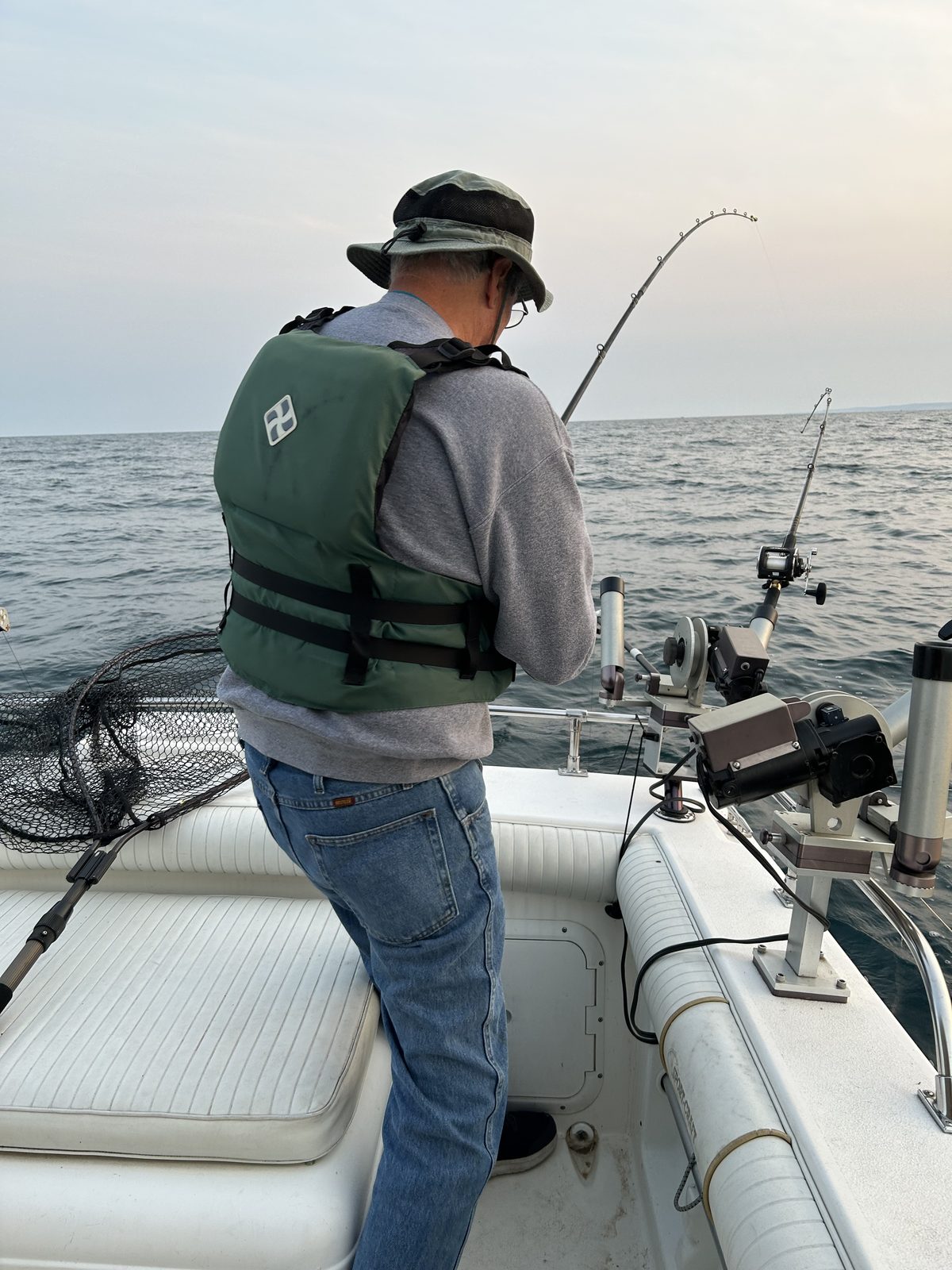
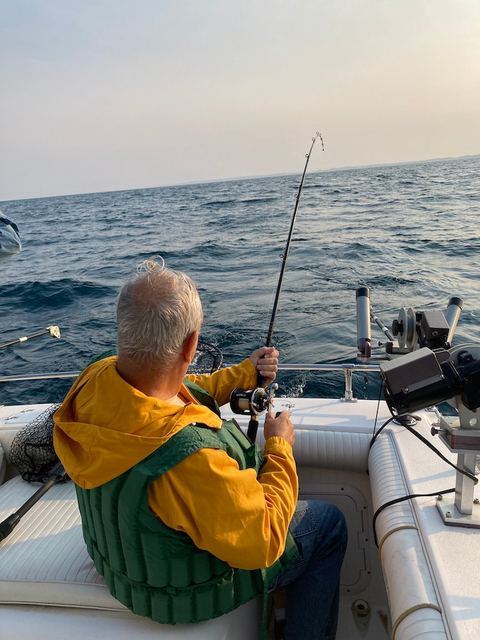 Chet battles a big one on Lake Michigan.
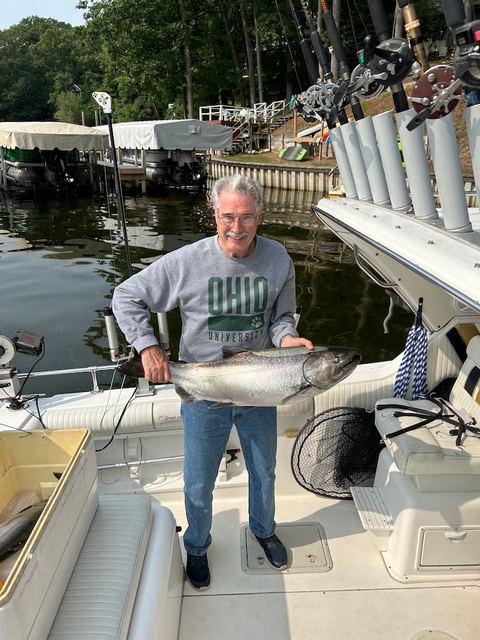 Corf with the biggest fish he has ever caught, a king salmon.
 Zork's beautiful cabin was a wonderful place to spend a few days with old college buddies.
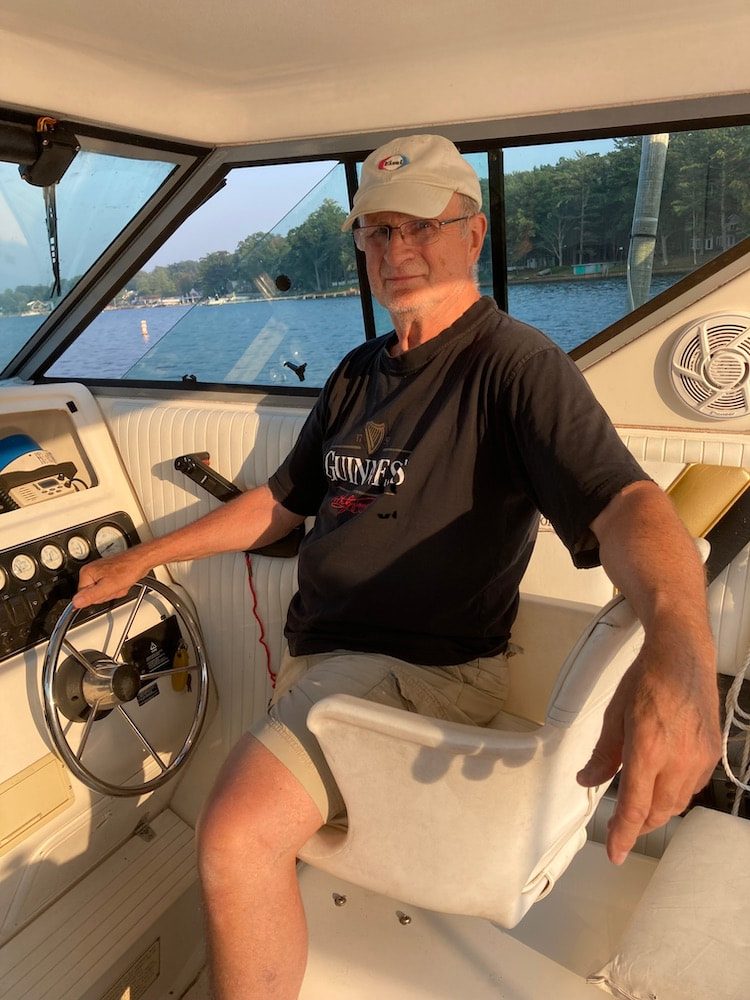
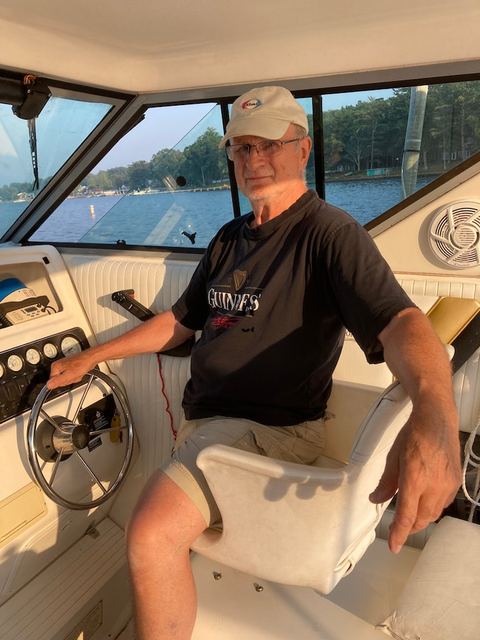 Captain Zork pilots the Shibumii.
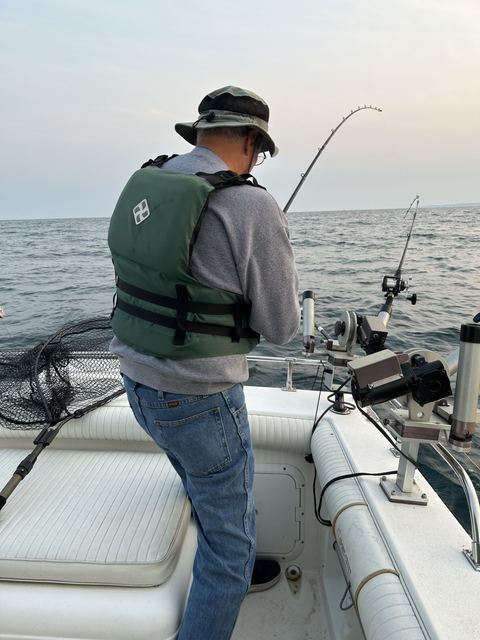 Corf battles a Lake Michigan lunker!
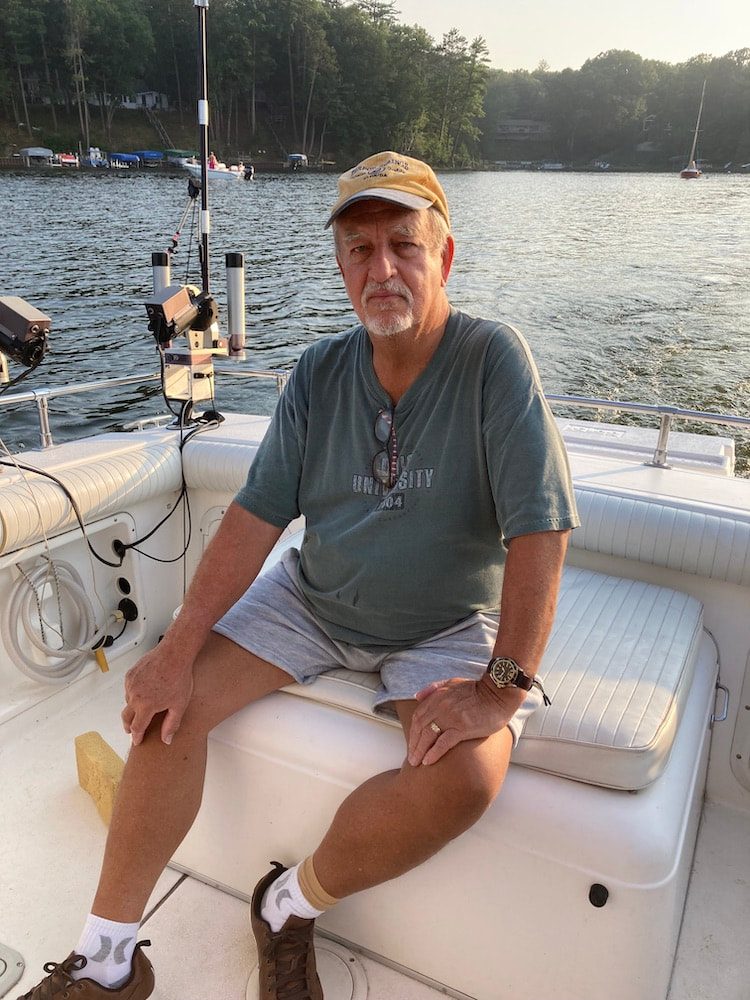
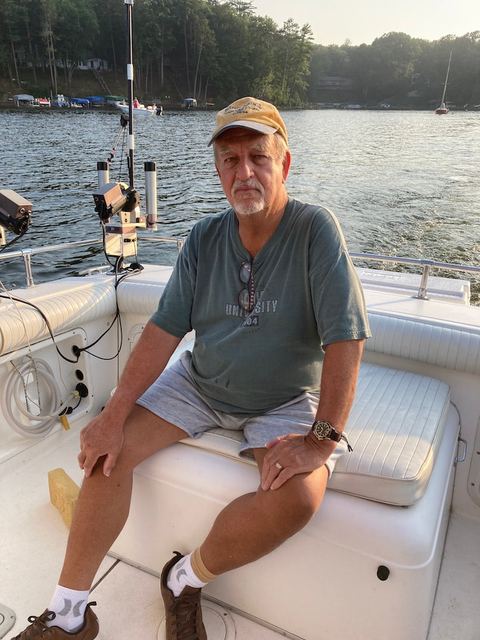 Chet relaxes aboard the Shibumii.
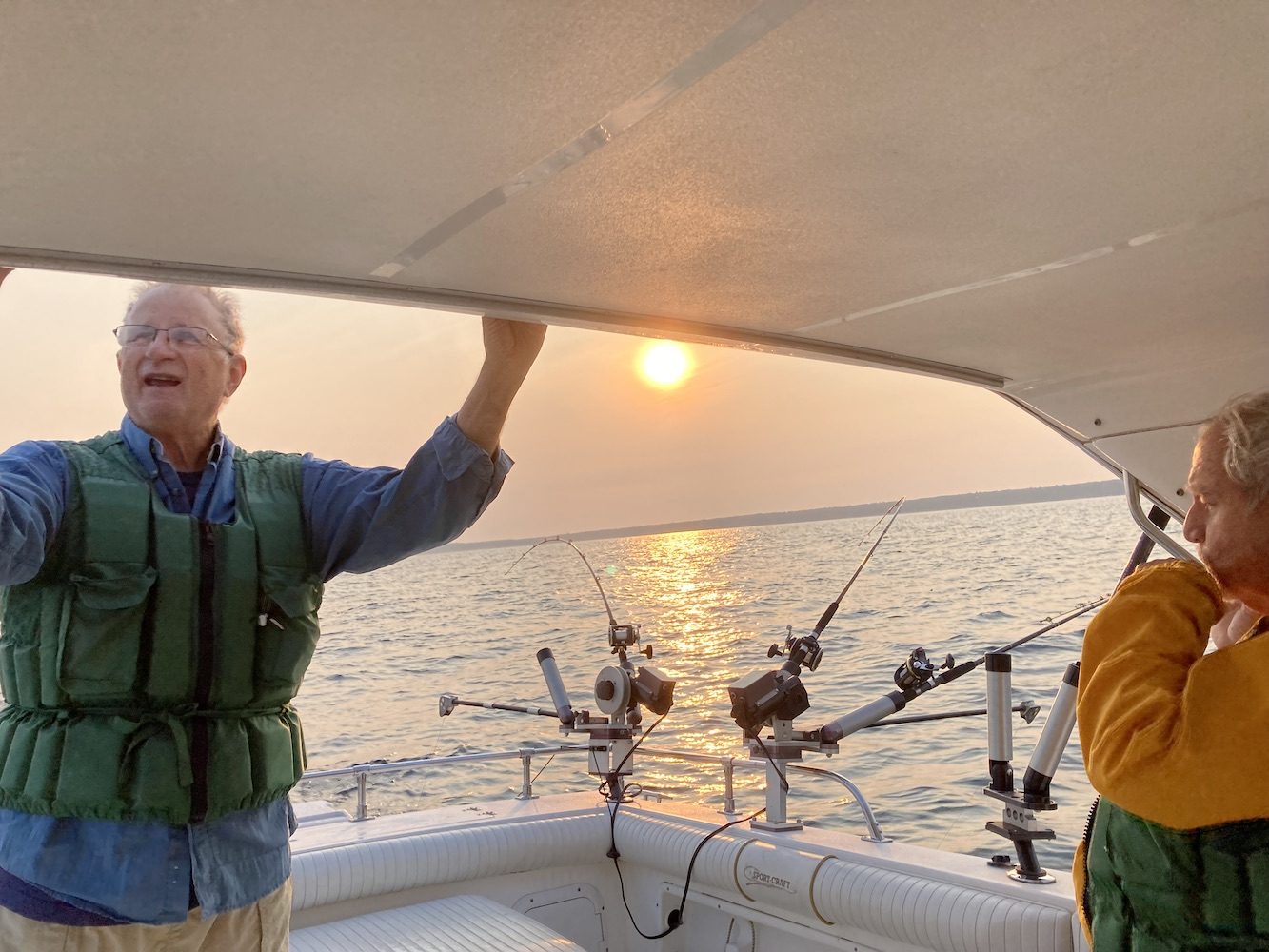
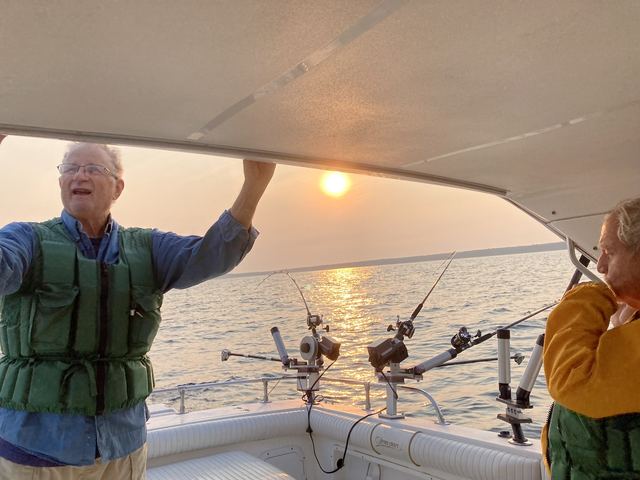 Sunrise on Lake Michigan with Captain Zork.
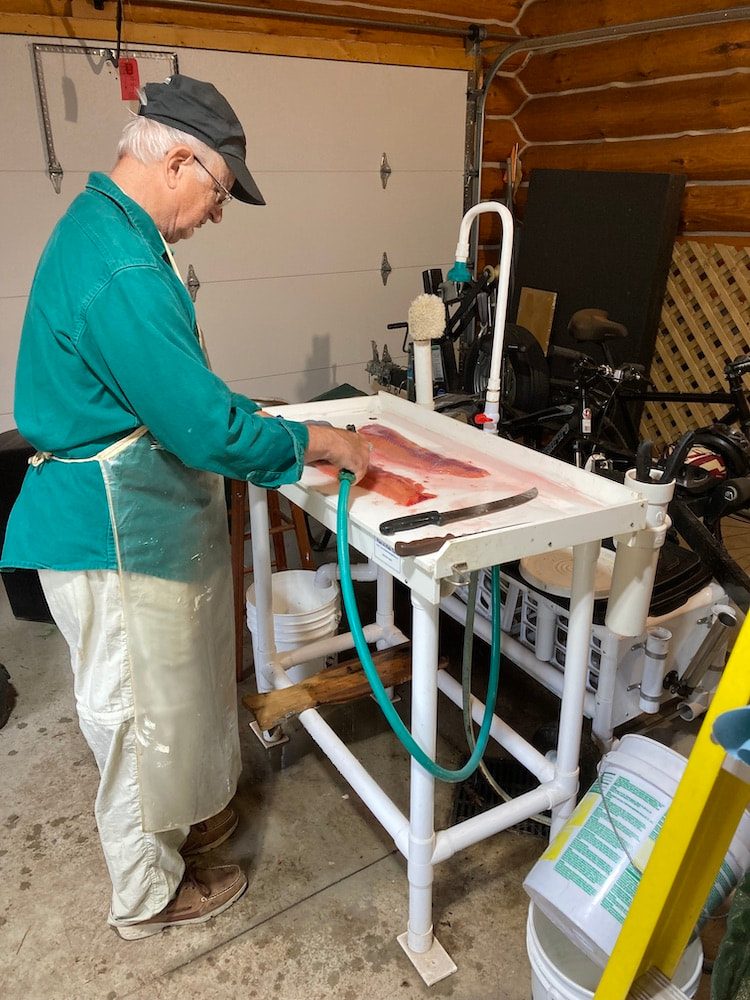
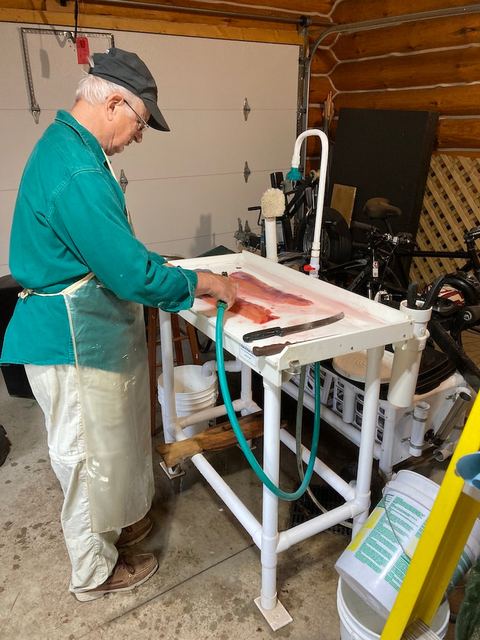 How nice to have an experienced host and guide who also cleans fish like a pro!
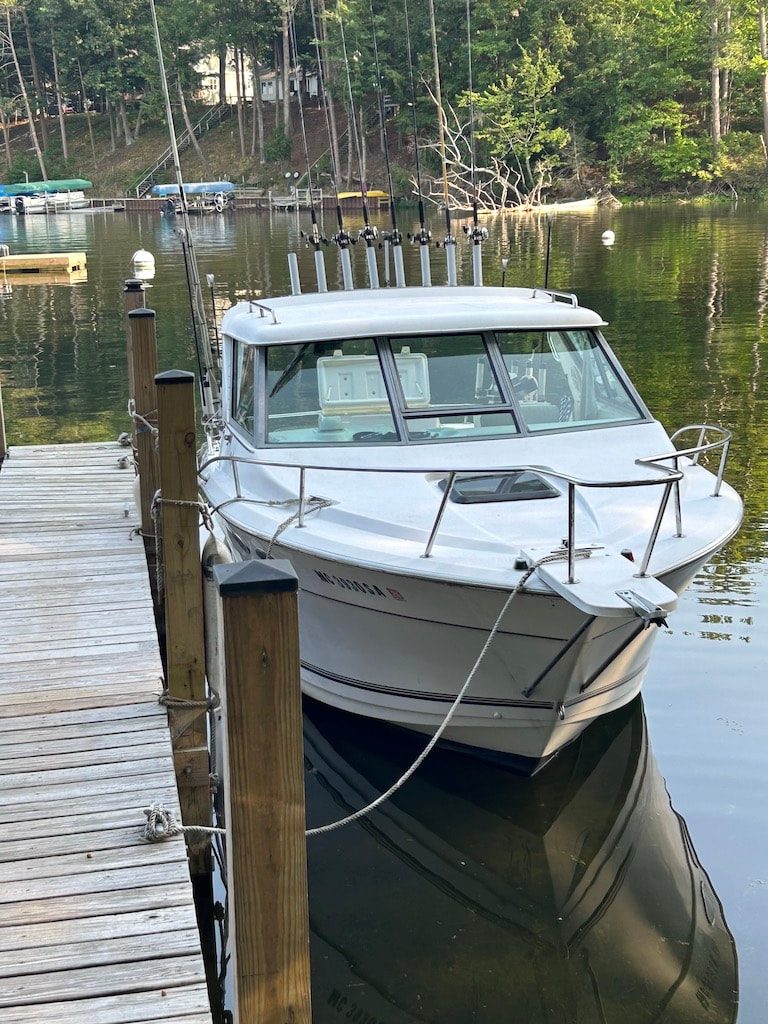
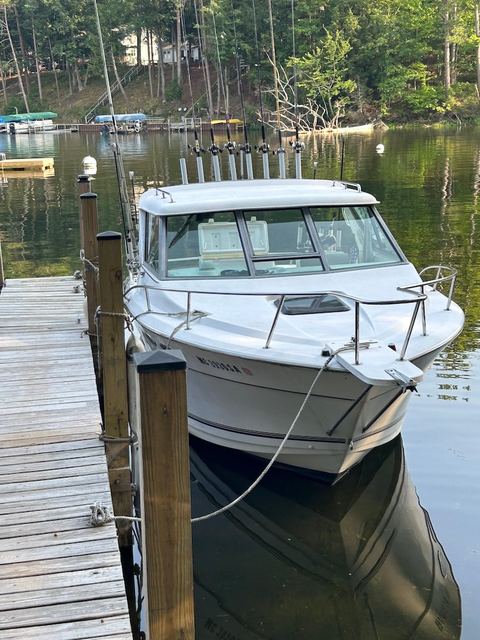 The Shibumii at rest on Pentwater Lake.
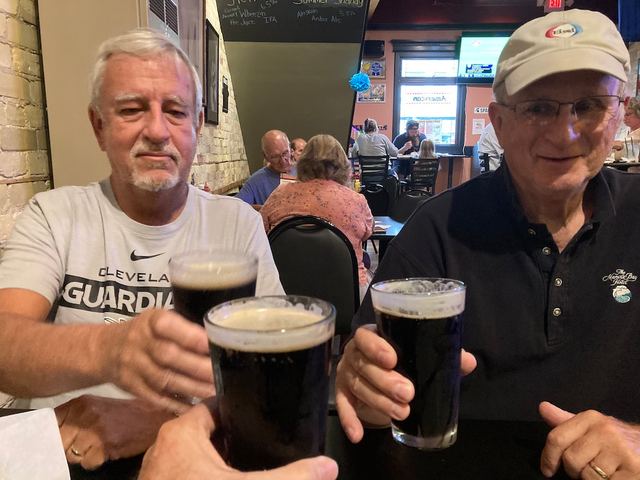 Toasting a wonderful day on Lake Michigan.